

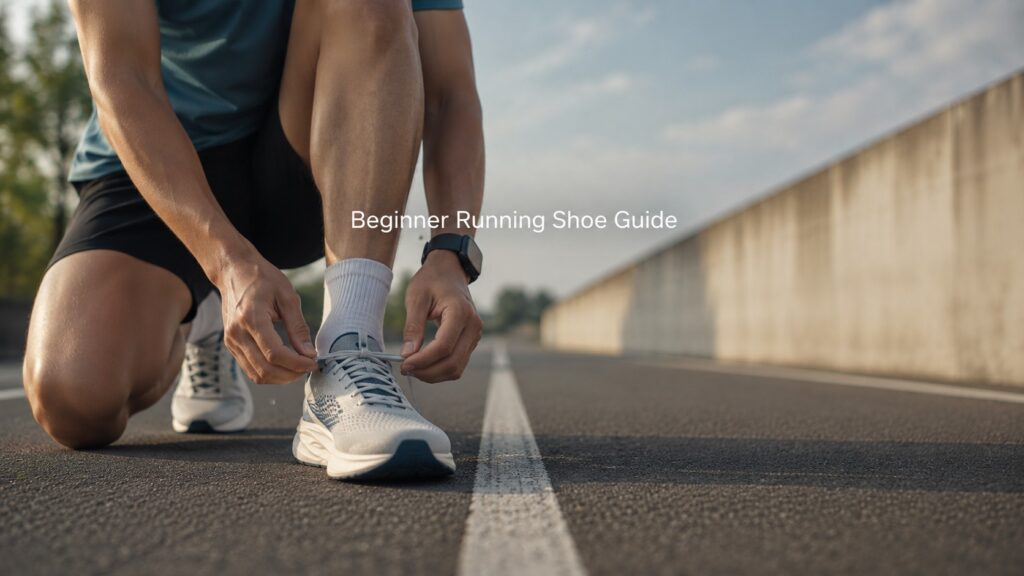
Choosing your first running shoes can feel confusing. There are neutral shoes, stability shoes, max cushion shoes, carbon shoes, trail shoes and many marketing terms that sound more important than they really are.
As a beginner, you do not need the most advanced shoe. You need a shoe that fits, feels stable and supports regular training.
What Beginners Should Look For
Comfortable fit
The shoe should feel comfortable immediately. It should not squeeze your toes, rub your heel or create pressure on the top of the foot.
Stable ride
Beginners often run at easy pace and may get tired quickly. A stable shoe helps keep the ride predictable.
Enough cushioning
You need protection from repeated impact, but you do not necessarily need the softest or highest shoe.
Durable outsole
Your first running shoes should handle regular training without wearing out too quickly.
What Shoe Type Is Best for Beginners?
For most new runners, a daily trainer is the best starting point. It is more versatile than a racing shoe and less extreme than a very specialized model.
If you are not sure whether you need support, start by testing stable neutral daily trainers and stability shoes. The better choice is the one that feels more natural and controlled when running.
Should Beginners Buy Stability Shoes?
Only if they need them. Stability shoes can help if your feet roll inward strongly or if neutral shoes feel unstable.
But not every beginner needs stability. Comfort and control matter more than the label.
Should Beginners Buy Max Cushion Shoes?
Max cushion shoes can be comfortable, but they are not automatically the best first running shoe. Some are tall and soft, which can feel unstable.
A balanced daily trainer is often safer as a first choice.
Should Beginners Buy Carbon Race Shoes?
Usually no. Carbon race shoes are built for performance, not beginner mileage. They can be expensive, less durable and less stable than daily trainers.
Buy them later if you race seriously and already know what you like.
How Running Shoes Should Fit
- Leave some space in front of the toes.
- The heel should feel secure.
- The midfoot should hold without pressure.
- The toes should not be squeezed together.
- Try shoes with the socks you actually run in.
Road or Trail?
If you run on pavement, choose road running shoes. If you run on dirt, mud, rocks or forest trails, choose trail shoes.
If you do a bit of both, a door-to-trail shoe can work.
Common Beginner Mistakes
Buying by colour or brand only
The best-looking shoe is not always the best fitting shoe.
Choosing a race shoe too early
Fast shoes are not the same as good beginner shoes.
Ignoring discomfort
A running shoe should not need painful breaking in. Small stiffness can improve, but pressure points usually remain.
Bottom Line
Beginner running shoes should be comfortable, stable and suitable for regular easy running.
Start with a good daily trainer, then add more specialized shoes later if your running develops.
Use the Running Shoe Fitter to find a beginner-friendly running shoe based on cushioning, foot type and running surface.