

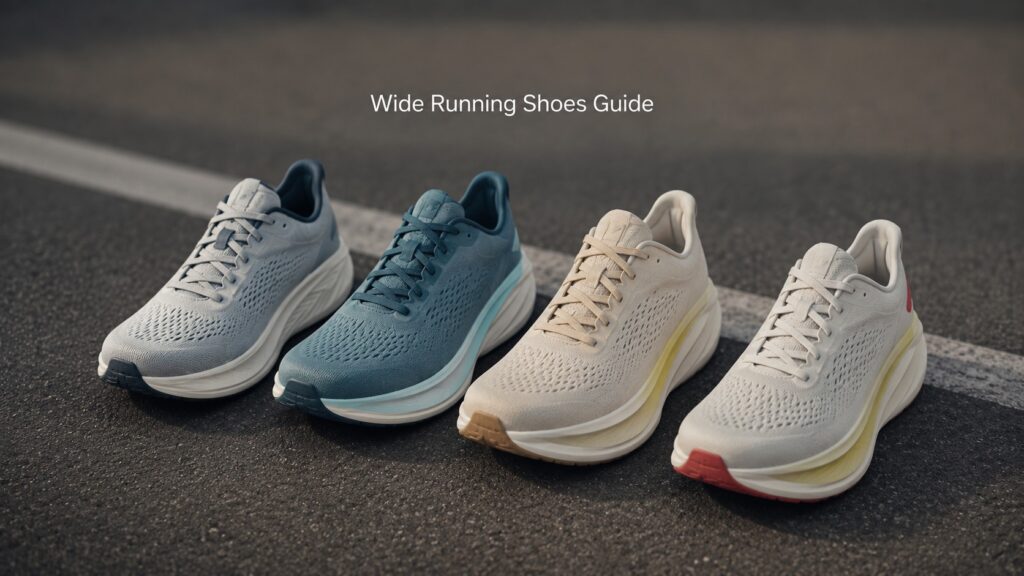
If normal running shoes feel tight, numb or painful, you may need wide running shoes. But width is not only about shoe size. Toe box shape, upper volume and midfoot fit also matter.
A wide shoe should give your foot enough space without feeling sloppy or unstable.
What Does Wide Mean in Running Shoes?
Running shoes are often sold in different widths. Standard width works for many runners, but some brands also offer wide and extra-wide versions.
However, two shoes with the same width label can still fit differently. One may have a roomy toe box, another may feel narrow through the midfoot.
Signs You May Need Wide Running Shoes
- your toes feel squeezed together
- you get pressure on the outside of the forefoot
- your foot spills over the midsole
- the upper bulges strongly on both sides
- your feet go numb during runs
- you need to loosen the laces too much to feel comfortable
Wide Toe Box vs Wide Shoe
A wide toe box gives more room in the front of the shoe. A wide shoe usually increases space through more of the shoe, including forefoot and sometimes midfoot.
If your toes need space but your midfoot is normal, you may prefer a shoe with a naturally roomy toe box rather than a full wide version.
How Wide Running Shoes Should Fit
Your toes should be able to spread slightly. The shoe should not press on the little toe or big toe joint. At the same time, your foot should not slide around inside the shoe.
Good fit means:
- secure heel
- comfortable midfoot hold
- enough toe room
- no side pressure
- no excessive movement inside the shoe
Do You Need to Size Up?
Sometimes runners size up to get more width. This can work, but it can also create problems if the shoe becomes too long.
If the length is already correct but the sides are tight, a wide version is usually better than simply going longer.
Wide Shoes for Long Runs
Feet often swell during long runs. A shoe that feels snug at the start may become too tight after an hour.
If you run long distances, leave enough space for swelling, especially in the forefoot.
Common Mistakes
Assuming every brand fits the same
Some brands naturally run narrow, some are more generous. Always judge the actual fit.
Buying too much width
A shoe that is too wide can feel unstable and cause rubbing because the foot moves around.
Ignoring lacing
Lacing can improve midfoot hold, but it cannot fix a shoe that is fundamentally too narrow.
Bottom Line
Wide running shoes make sense if standard shoes squeeze your forefoot, cause numbness or create side pressure.
The goal is not the widest shoe possible. The goal is enough room in the right place with secure hold everywhere else.
Use the Running Shoe Fitter to narrow down running shoes by width, cushioning and training use.