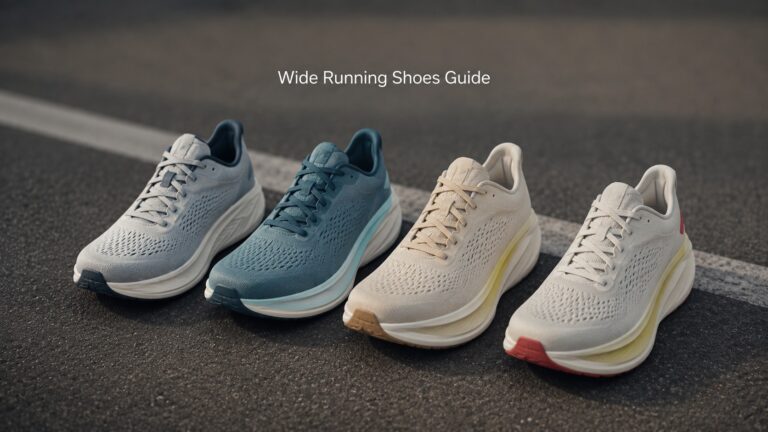


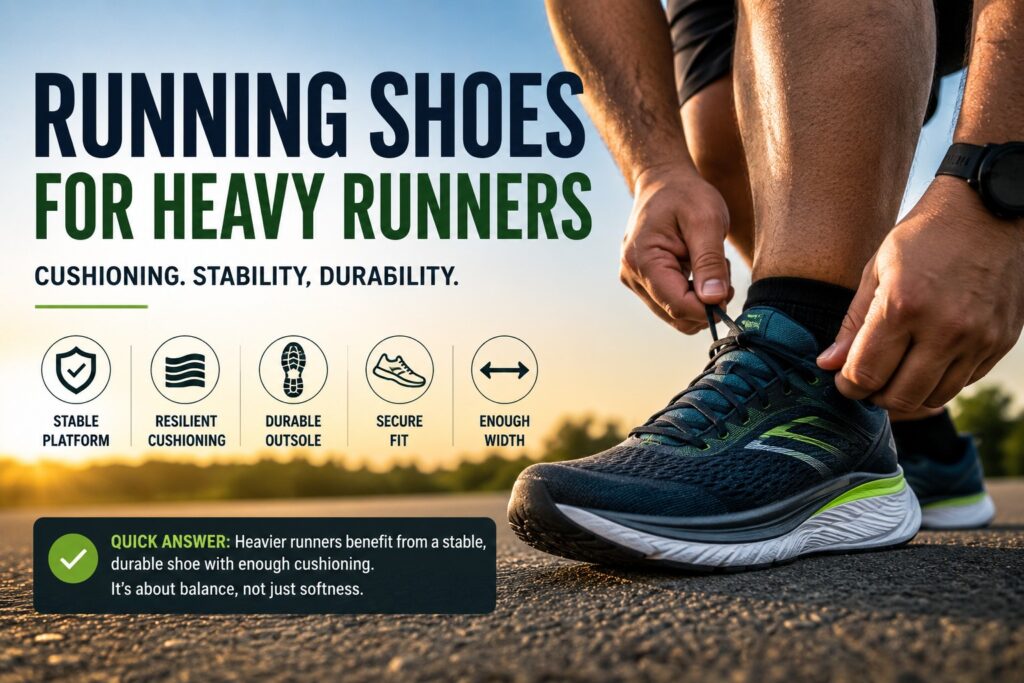
Body weight can influence how a running shoe feels and wears, but it should not be the only factor used to choose a shoe. A heavier runner may prefer a firm, stable platform, while another may feel better in softer cushioning.
What Does “Heavy Runner” Mean?
There is no universal weight cutoff. Shoe brands rarely use one shared definition, and two runners with the same body weight may need very different shoes.
Useful factors include pace, weekly distance, foot width, landing pattern, training surface and preferred cushioning feel.
What to Look For
A Stable Base
A broad platform can make a shoe feel more controlled, especially when the foam is soft or the stack height is high.
Resilient Cushioning
Look for cushioning that stays comfortable without collapsing too quickly. More foam is not automatically better if the midsole feels unstable.
Durable Outsole Rubber
Good rubber coverage can improve durability for daily training. Shoes with large areas of exposed foam may wear faster.
A Secure Upper
The heel and midfoot should feel secure without pressure points. A loose upper can make a stable midsole feel less controlled.
Enough Forefoot Width
The toes should have room to spread. Do not size up only to gain width, because this can create excess length and heel movement. A proper wide version is usually better.
A Suitable Heel-to-Toe Drop
There is no single best drop for heavier runners. The right choice depends on comfort, running form and previous shoe experience.
Soft Cushioning vs Firm Cushioning
Very soft cushioning can feel comfortable at first, but some runners find that it compresses too much or feels unstable. Firmer cushioning may feel more controlled and can hold its shape better during longer runs.
The goal is not maximum softness. It is a balance of comfort, stability and durability.
Neutral vs Stability Shoes
Body weight alone does not mean a runner needs a stability shoe. A stability shoe is more relevant when the runner benefits from additional guidance or support because of their mechanics or comfort preferences.
A stable neutral shoe may be enough for many runners.
Best Shoe Features by Use
| Use | What to prioritize |
|---|---|
| Daily training | Durability, stable cushioning and secure fit |
| Walking and running | Comfort, broad platform and outsole coverage |
| Long runs | Resilient cushioning and stable geometry |
| Faster sessions | Lower weight without sacrificing control |
| Wide feet | True wide sizing and enough forefoot volume |
Durability and Replacement
A shoe may lose cushioning before the outsole looks badly worn. Possible replacement signs include:
- the midsole feels noticeably flatter or harsher
- the shoe feels less stable than before
- new discomfort appears without another clear cause
- the outsole is worn through in high-contact areas
- the upper no longer holds the foot securely
Rotating two pairs can help each shoe recover between runs and makes changes in cushioning easier to notice.
Common Mistakes
- choosing the softest shoe available
- sizing up only to create more width
- ignoring platform stability
- using lightweight race shoes for all training
- replacing shoes only when the outsole looks worn
- assuming every heavier runner needs a stability shoe
Bottom Line
Heavier runners should focus on the complete shoe rather than cushioning thickness alone. A stable platform, resilient midsole, durable outsole and secure fit often matter more than maximum softness.
Frequently Asked Questions
Do heavier runners need more cushioning?
Not necessarily. They need enough cushioning to stay comfortable, but stability and foam resilience can be just as important as thickness.
Are max-cushion shoes better for heavy runners?
They can be comfortable, but very soft or narrow max-cushion shoes may feel unstable.
Do heavy runners need stability shoes?
No. Weight alone does not determine whether a stability shoe is needed.
How often should heavier runners replace running shoes?
There is no fixed mileage for everyone. Replace them when cushioning, stability, grip or upper support noticeably deteriorates.
Are carbon shoes suitable for heavier runners?
They can be, especially for racing or faster sessions, but they are not automatically the best choice for daily training.
Should heavier runners avoid lightweight shoes?
No, but lightweight shoes may offer less durability or stability and may be better for selected sessions.