

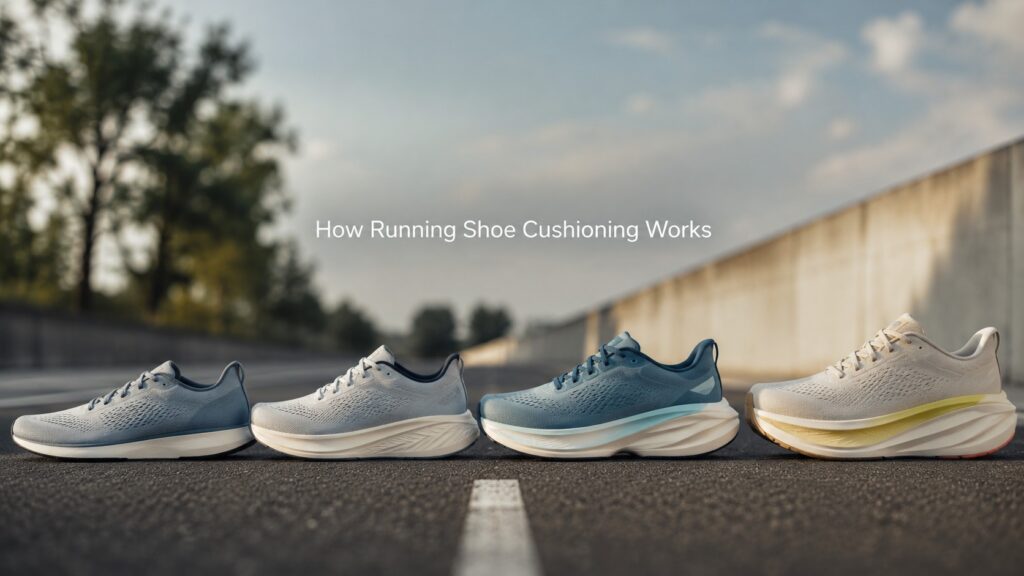
Running shoe cushioning is one of the first things runners notice, but it is also one of the easiest things to misunderstand. More cushioning does not automatically mean better comfort, fewer injuries or a better shoe.
The right cushioning depends on your body, running surface, pace, distance and how you like the shoe to feel underfoot.
What Does Cushioning Actually Do?
Cushioning sits between your foot and the ground. Its job is to absorb impact, shape the ride of the shoe and influence how stable or bouncy the shoe feels.
Modern running shoes use foams with very different personalities. Some feel soft and protective. Some feel firm and controlled. Some feel springy and energetic. The marketing often focuses on the foam name, but the real question is simpler:
Does this cushioning match how and where you run?
Soft Cushioning
Soft cushioning feels comfortable when you step into the shoe. It is popular for easy runs, recovery runs and runners who want a plush feeling.
Soft shoes can work well if you run at relaxed pace and want comfort more than speed. But very soft shoes can feel unstable for some runners, especially if the midsole is high and your foot sinks into it.
Soft cushioning is often good for:
- easy runs
- recovery runs
- longer slow runs
- runners who want comfort first
Soft cushioning can be less ideal if:
- you want a very stable platform
- you run fast sessions
- you dislike a sinking feeling
- you already feel unstable in high-stack shoes
Firm Cushioning
Firm cushioning does not always mean harsh. A firmer shoe can feel more predictable, stable and responsive. Some runners prefer firm shoes because they feel more connected to the ground.
Firm cushioning can be useful for daily training, faster runs or runners who do not like a soft, wobbly ride.
Firm cushioning is often good for:
- runners who want stability
- faster daily runs
- road running with more ground feel
- heavier runners who compress soft foam too much
Max Cushion Shoes
Max cushion running shoes use a thick midsole to create a highly protective ride. They are popular for long runs and easy miles.
However, max cushion is not automatically better. A high stack can feel less stable, especially around corners or on uneven paths. Some runners also feel disconnected from the ground.
Max cushion shoes are often good for:
- long easy runs
- high weekly mileage
- runners who want more protection
- recovery days
Be careful with max cushion if:
- you need strong lateral stability
- you run mostly on uneven paths
- you prefer ground feel
- you want one shoe for fast intervals and daily runs
Daily Trainer Cushioning
A daily trainer usually sits in the middle. It should be comfortable enough for regular runs, stable enough for repeated use and not too extreme in one direction.
For most runners, a good daily trainer is more useful than a very soft recovery shoe or a carbon-plated racing shoe.
How to Choose Cushioning
Use this simple logic:
- Comfort first: choose softer or more cushioned daily trainers.
- Stability first: choose a slightly firmer and wider platform.
- Long runs: choose protective cushioning, but avoid unstable shoes.
- Faster training: choose a lighter, more responsive midsole.
- Beginner running: choose a comfortable daily trainer, not an extreme shoe.
Common Mistakes
Buying the softest shoe possible
Soft shoes can feel great in the shop, but they are not always best after 10 km. Stability and fit matter just as much as softness.
Assuming more foam means fewer injuries
Cushioning changes how the shoe feels, but injury risk depends on training load, strength, mobility, running form, recovery and many other factors.
Using race shoes for everyday running
Fast shoes can be fun, but daily trainers usually make more sense for regular mileage.
Bottom Line
Running shoe cushioning should match your running. Soft is not always better, firm is not always harsh, and max cushion is not automatically safer.
Start with a shoe that feels comfortable, stable and appropriate for your normal runs. Then use more specialized shoes only if you know why you need them.
Use the Running Shoe Fitter to narrow down running shoes by cushioning, foot type, running style and training use.