

Buying football boots for kids can be surprisingly confusing. Brands promote expensive Elite models, children want the boots worn by their favourite players, and parents have to decide what is actually practical.
A well-fitting Academy or Pro boot is usually a better purchase than an Elite boot that is too narrow, too large or unsuitable for the playing surface.
1. Start With the Playing Surface
Before comparing brands or models, check where your child plays most often.
| Soleplate | Best used for | Buying note |
|---|---|---|
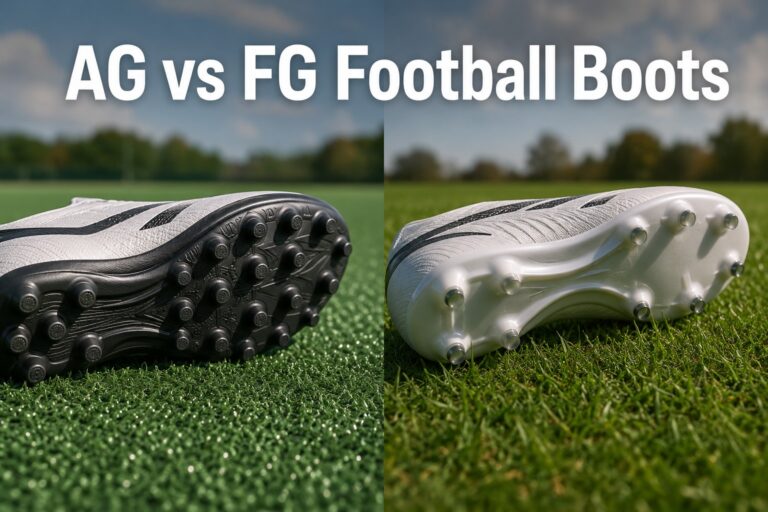
| AG | Regular artificial-grass use | Usually the best choice for children training frequently on modern artificial pitches |
| MG | Artificial grass and natural grass | A practical compromise when training and matches are played on different surfaces |
| FG | Firm natural grass | Not always suitable for frequent artificial-grass use |
| TF | Short turf, carpet-style pitches and hard synthetic surfaces | Often more comfortable and stable on older, shallow artificial surfaces |
Read more: AG vs FG Football Boots.
2. Check Foot Width and Volume
Children’s feet are not all shaped the same. Some are narrow and low-volume, while others need more room across the forefoot, midfoot or instep.
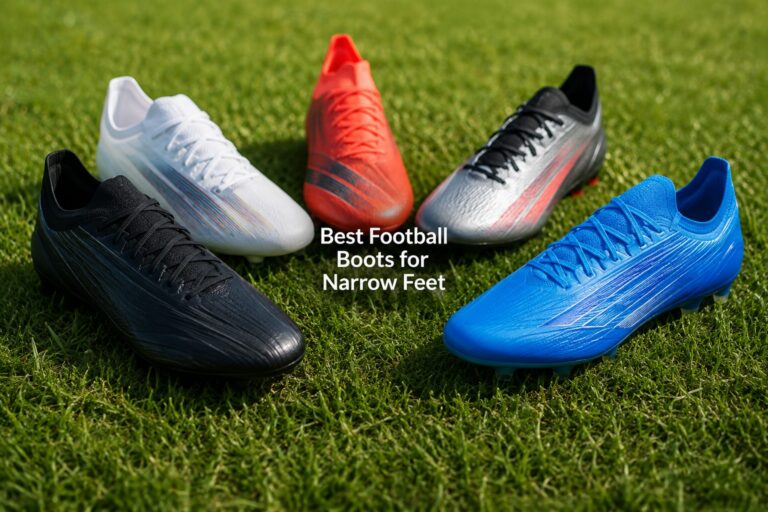
A narrow-footed child may fit well in boots such as the Nike Mercurial, Adidas F50, Mizuno Morelia Neo or New Balance Furon. Wider feet may need more accommodating options such as the Mizuno Morelia II, Mizuno Monarcida, New Balance 442, Joma Top Flex or selected Puma King models.
3. Choose the Correct Size
It is understandable to leave some room for growth, but football boots should not be bought excessively large.
Boots that are too long can cause:
- Heel slipping
- Blisters
- Reduced stability
- Too much movement inside the boot
- Poorer touch on the ball
A small amount of room in front of the toes is acceptable, especially for a growing child. However, the heel should remain secure and the foot should not slide when running, stopping or changing direction.
4. Do Kids Need Elite Football Boots?
Sometimes, but not always.
An older child who trains frequently, competes seriously and already knows which boot shape fits may appreciate the lighter upper and more responsive construction of an Elite boot.
For many young players, however, Pro or Academy models are the more sensible choice.
| Tier | Usually best for | Main consideration |
|---|---|---|
| Academy / League | Younger players, beginners and recreational football | Good value, durability and comfort |
| Pro | Regular club players and serious older children | Often the best balance between fit, performance and price |
| Elite / Ultimate | Advanced players who train heavily and know the model fits | Higher price and thinner materials, with limited benefit if the fit is wrong |
Read more: Pro vs Elite Football Boots.
5. Comfort Beats Marketing
Children often want the boots worn by their favourite professional player. That is completely normal, but the player endorsement should come after fit and comfort.
A popular boot can still be wrong for your child’s foot shape.
- Pain on the outside of the forefoot
- Numbness or tingling
- Toes being pushed together
- Heel slipping
- Blisters after short use
- The child repeatedly wanting to remove the boots
Do not rely on the idea that every boot will eventually stretch. Synthetic uppers often adapt only slightly, and painful pressure should not be treated as a normal break-in process.
6. Laces, Laceless or High Collar?
For most children, laced football boots are the safest choice because the fit can be adjusted more precisely.
- Laced boots: Best for adjusting pressure and lockdown.
- Laceless boots: Can work well when the foot shape matches the boot, but offer less adjustment.
- High-collar boots: Change the ankle sensation but do not automatically provide meaningful ankle support.
7. Do Not Forget About Durability
Children who train several times per week can wear out boots quickly. The most expensive boot is not always the most durable.
Thin Elite uppers are designed for low weight and close touch. Academy and Pro boots may use more structured materials that tolerate regular training, wet conditions and repeated use better.
If possible, let the boots dry naturally after training. Do not place them directly on a radiator, as excessive heat can damage the upper and soleplate.
Best Buying Strategy for Parents
- Check the surface: Artificial grass, natural grass or both.
- Choose the soleplate: AG, MG, FG or TF.
- Assess the foot: Narrow, medium, wide, low-volume or high-volume.
- Check the size: Use centimetres and the brand’s own chart.
- Choose the tier: Academy, Pro or Elite based on use—not status.
- Test comfort: Check heel lockdown, toe room and pressure points.
- Only then choose: Colour, brand and player endorsement.
Quick Recommendations by Situation
| Situation | Best starting point |
|---|---|
| Child trains mainly on artificial grass | Dedicated AG boot or a suitable MG model |
| Narrow feet | Mercurial, F50, Morelia Neo or Furon-style fit |
| Wide feet | Morelia II, Monarcida, New Balance 442 or another accommodating model |
| Older child with very narrow feet | Consider women-specific boots from approximately EU 36 upward |
| Serious club player | Pro tier is often the best value |
| Fast-growing child | Comfortable Academy or Pro boot with modest growing room |
Final Recommendation
For most children, the best football boot is not the most expensive model. It is the boot that fits the child’s foot, matches the playing surface and remains comfortable throughout training and matches.
Use our Football Boot Finder to narrow down suitable kids’ boots by foot width, playing surface and level.