

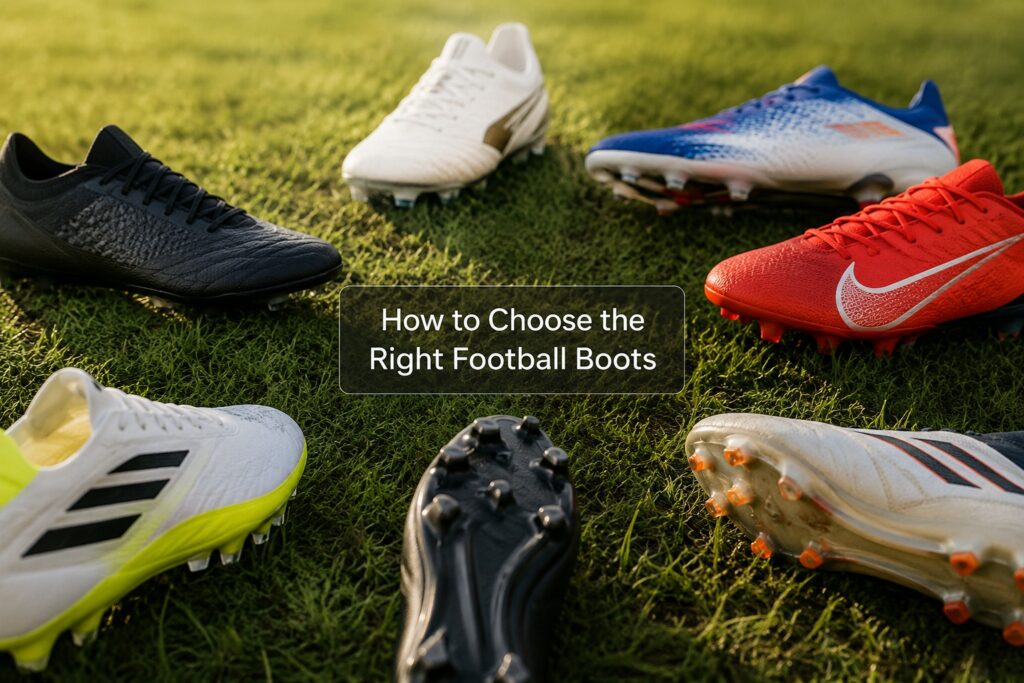
Choosing the right football boots is not mainly about marketing terms like speed, control, power or agility. Those labels can be useful, but they should not be the first thing you look at.
The most important factors are much simpler:
- Fit: do the boots match your foot width?
- Surface: are they suitable for the pitch you play on?
- Level: do you really need Elite boots, or is a Pro or Academy model enough?
A great football boot that does not fit your foot is not a great boot for you. A narrow-footed player and a wide-footed player should often not buy the same model, even if both boots are popular.
1. Start with the fit, not the brand
Many players choose boots because their favourite professional player wears them. That is understandable, but it is not always smart.
Professional players often wear custom-fitted versions, and they usually replace boots much more often than normal players. For most players, especially kids and club players, fit and comfort matter more than wearing the same silo as a star player.
Narrow feet
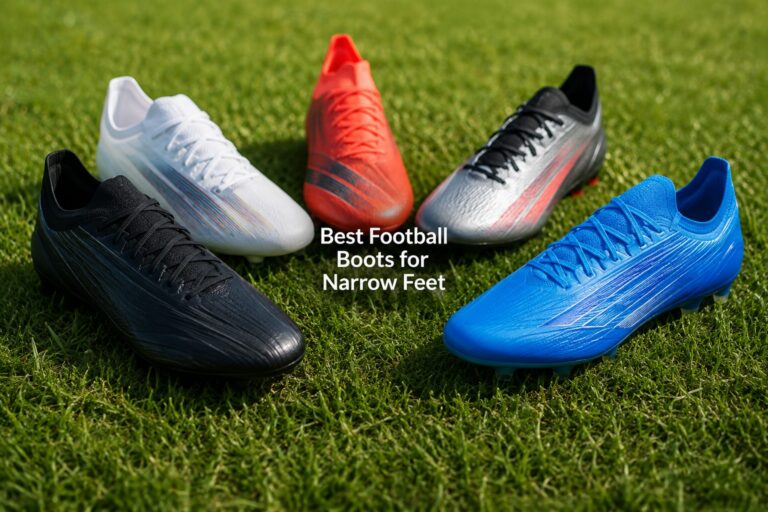
If you have narrow feet, you usually need boots with good lockdown and a tighter shape through the midfoot and forefoot.
Typical narrow or narrow-to-medium options may include speed-oriented boots such as Nike Mercurial, Adidas F50 or similar models. Some medium boots can also work if the upper adapts well to the foot.
For example, Nike Tiempo is not the narrowest boot on the market, but many narrow-to-medium players still find it comfortable because the upper can adapt well to the foot. It should not usually rank ahead of true narrow boots for a narrow-footed player, but it can still be a good option.
Medium feet
Medium feet are the easiest to fit. Many boots can work here, including all-round models such as Tiempo, Predator, Phantom, Copa, Puma Ultra, Skechers SKX and Mizuno Morelia Neo.
The challenge for medium feet is not finding boots that fit. The challenge is choosing the right model for your surface, level and budget.
Wide feet
Wide-footed players should be careful with narrow speed boots. A boot may feel exciting in the shop, but if it crushes your toes or creates pressure in the midfoot, it will not be a good match.
Wider or more accommodating options often include boots such as Puma King, Mizuno Morelia II, Mizuno Monarcida, New Balance 442, Joma Top Flex, Umbro Speciali and Kipsta Viralto-type models.
2. Choose the right soleplate for your surface
The second major factor is the pitch. This is where many players make expensive mistakes.
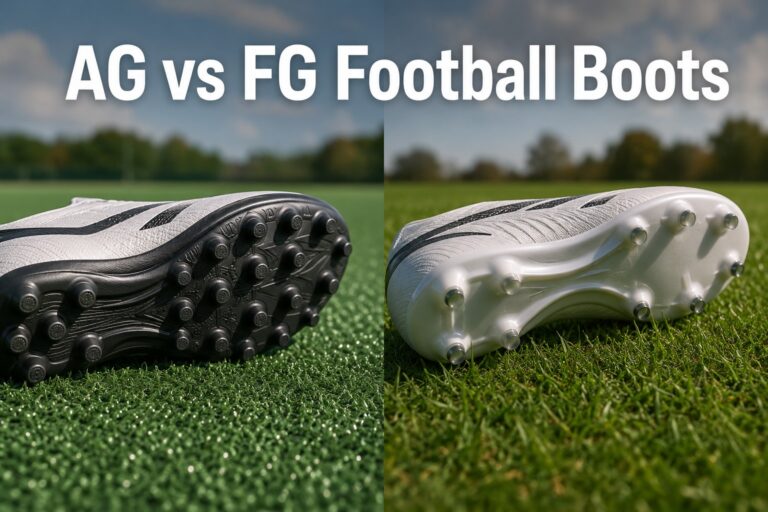
FG: natural grass
FG means firm ground. These boots are designed mainly for natural grass pitches that are not too soft or muddy.
FG studs usually give good traction on grass, but they are not always the best choice for artificial grass. On some AG pitches, aggressive FG studs can feel too grippy and may increase stress on the joints.
AG: artificial grass
AG boots are designed for artificial grass. They often use more studs, shorter studs or a stud pattern that distributes pressure more evenly.
If you mostly play on artificial grass, AG boots are usually the safest and most logical choice.
MG: mixed ground
MG boots are made for mixed surfaces. They can be useful for players who switch between natural grass and artificial grass.
MG can be practical for kids and amateur players who train on one surface and play matches on another. However, a good dedicated AG boot is still often better if you mainly play on artificial grass.
TF: turf
TF boots are made for turf, hard synthetic surfaces and small-sided football pitches. They have many small rubber studs instead of larger football studs.
If you play mainly on older artificial pitches, concrete-like turf or small-sided courts, TF may be the better choice.
3. Do not overpay for the wrong boot level
Most brands sell football boots in different levels. The names vary by brand, but the idea is usually similar.
| Level | Usually best for | Typical buyer |
|---|---|---|
| Club / Academy / League | Novice players, casual players, kids | Players who want value and durability |
| Pro | Intermediate to strong club players | Most serious players |
| Elite / Ultimate / Made in Japan | Expert players and boot enthusiasts | Players who want the best materials and lowest weight |
Elite boots can be excellent, but they are not always necessary. In many cases, the Pro version gives most players a very similar experience for much less money.
This is especially true for kids. If a child is still growing quickly, spending a lot on Elite boots may not make sense unless the player is highly competitive and the fit is clearly better.
4. Kids should not automatically buy the cheapest boots
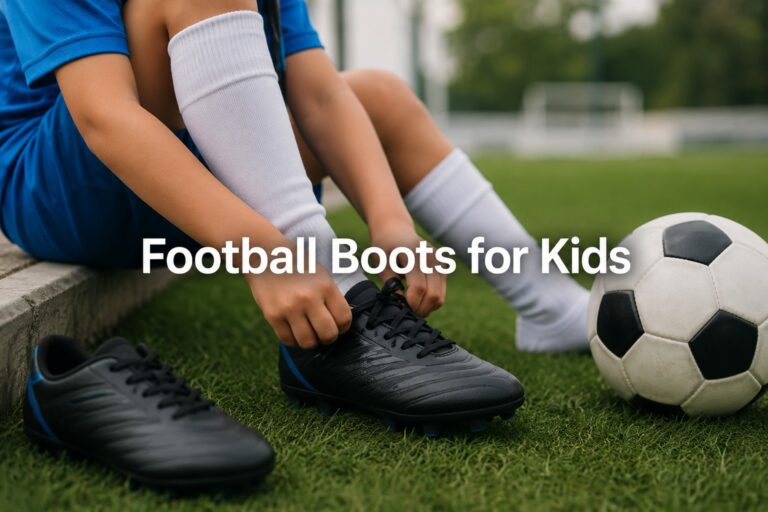
For kids, the decision is slightly different. Cheap boots can be fine for casual play, but if a child trains several times per week, comfort and fit become much more important.
Academy or League boots can be good enough for beginners or casual players. For more regular training, Pro or similar mid-level boots are often a better choice if the price is reasonable.
Kids with adult shoe sizes should usually choose from adult-size boots, not junior boots. For example, a 12-year-old with EU 41 or 42 will often need adult models.
Women-specific boots can sometimes also work well for girls or boys with narrower feet, depending on the available sizes. The key is not the marketing label. The key is whether the shape fits the foot.
5. Ignore marketing terms until the basics are right
Boot brands often describe models as speed boots, control boots, power boots or agility boots. Those categories are not useless, but they should come later.
A so-called speed boot can be terrible for you if it is too narrow. A control boot can be excellent for a winger if it fits perfectly. A comfort boot can work for midfielders, defenders and strikers.
So instead of asking:
- Am I a speed player?
- Am I a control player?
- Which pro wears this boot?
Start with better questions:
- Are my feet narrow, medium or wide?
- Do I play on AG, FG, MG or TF?
- Do I need novice, intermediate or expert-level boots?
- Is the boot comfortable after trying it on?
6. How football boots should feel
Football boots should feel secure, but not painful. A snug fit is normal, especially with performance boots, but pressure points are a warning sign.
A good fit usually means:
- Your heel feels locked in.
- Your toes are not crushed.
- The midfoot feels secure without painful pressure.
- You do not slide inside the boot.
- The boot matches the surface you play on.
If a boot hurts badly when trying it on, do not assume it will magically become perfect after a few sessions. Some materials soften and adapt, but the basic shape needs to be close from the start.
7. Use a football boot finder before comparing brands
The easiest way to reduce mistakes is to filter boots by fit and surface first.
TheGearFitter Football Boot Finder is built around simple questions:
- Men, women or kids?
- Foot width?
- Surface?
After that, you can refine the results by level: novice, intermediate or expert.
This approach avoids one of the biggest problems in football boot shopping: recommending the same popular boots to everyone.
Final advice
The best football boots are not always the most expensive ones. They are the ones that fit your feet, suit your surface and match your level.
If you remember one thing, remember this:
Once those basics are right, choosing between Nike, Adidas, Puma, Mizuno, Skechers, New Balance, Kipsta, Joma, Umbro, Lotto, JAKO or any other brand becomes much easier.