

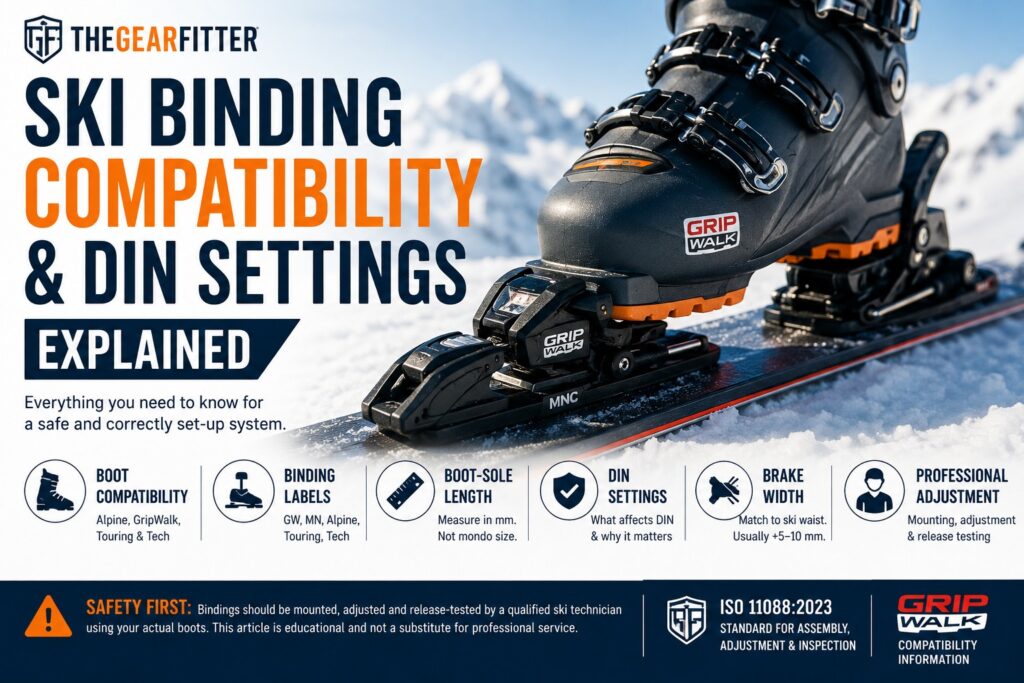
Ski bindings must match both your ski boots and the way the complete ski, binding and boot system is adjusted. A binding that fits physically is not automatically compatible or correctly set.
What Ski Binding Compatibility Means
Ski binding compatibility is not determined by a single number. Several parts need to work together:
- the ski-boot sole standard
- the binding’s approved boot standards
- the boot-sole length
- the binding adjustment range
- the brake width compared with the ski waist
- the skier’s required release setting
- correct forward-pressure and toe-height adjustment where applicable
The manufacturer’s documentation for the exact binding model always takes priority over general compatibility advice.
Alpine, GripWalk and Touring Boot Soles
| Boot or sole type | Common standard | Typical binding compatibility |
|---|---|---|
| Traditional alpine boot | ISO 5355 | Standard alpine bindings and compatible GripWalk or multi-norm bindings |
| GripWalk boot | ISO 23223 | Bindings marked GripWalk or approved multi-norm bindings |
| Touring boot | ISO 9523 | Approved multi-norm or touring bindings |
| Tech or pin boot | Compatible toe and heel inserts | Tech bindings designed for that boot interface |
GripWalk-labelled bindings generally accept both certified GripWalk boots and traditional alpine boots that comply with ISO 5355. A standard alpine binding without GripWalk or multi-norm approval should not be assumed to accept a GripWalk boot.
What Binding Labels Mean
- GW: GripWalk compatible
- MN or MNC: Multi Norm or Multi Norm Certified
- Alpine: intended for alpine-standard soles
- Touring: designed for compatible touring boots
- Tech or Pin: requires compatible metal inserts in the boot
The exact meaning can vary by brand and model, so check the product manual rather than relying only on a retailer description.
Are GripWalk Boots Compatible With Every Binding?
No. GripWalk boots should be used only with bindings explicitly marked as GripWalk compatible or with an approved multi-norm binding.
You can usually identify a compatible binding by the official GripWalk logo near the toe piece or anti-friction device. Traditional alpine boots that comply with ISO 5355 can normally also be used in GripWalk-certified bindings, but the binding still needs to be adjusted for the specific boot.
Can Touring Boots Fit Alpine Bindings?
Not automatically. Touring boots often use ISO 9523 soles, which are shaped differently from standard alpine soles. They require a binding specifically approved for that boot standard, such as a suitable multi-norm or touring binding.
A touring boot with tech inserts may still not work with every pin binding. Toe and heel geometry, insert compatibility and manufacturer approval all matter.
Ski Binding Brake Width
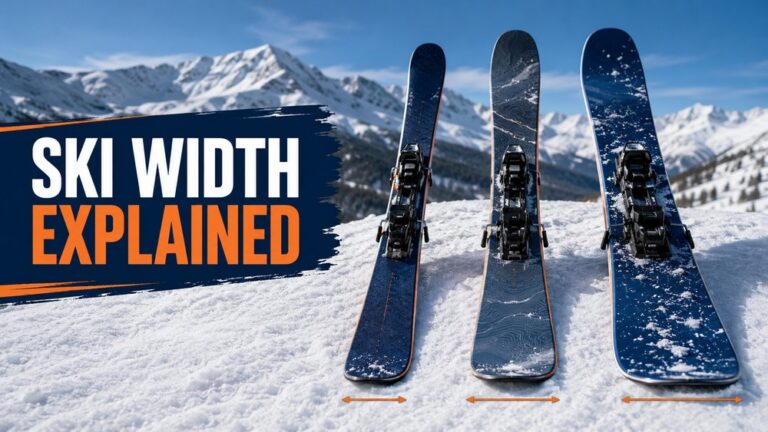
The brake arms must clear the sides of the ski when the binding releases. The brake should normally be close to the ski’s waist width.
For example, an 88 mm ski waist will often suit a brake around 90 mm or 95 mm, depending on the binding model. Brake shape differs between manufacturers, so confirm compatibility for the exact ski and binding.
What DIN Means
DIN is the common term used for the numbered release-value scale on alpine ski bindings. The number indicates how much force is required before the binding is designed to release under specified conditions.
- A higher number generally requires more force before release.
- A lower number generally releases more easily.
- A higher setting is not automatically safer.
- A setting that is too high may prevent the ski from releasing when needed.
- A setting that is too low may cause unwanted release while skiing.
DIN is not a performance score and should not be increased simply because a skier becomes faster or more confident.
What Affects the DIN Setting?
- skier weight
- skier height
- age
- skier type or aggressiveness
- boot-sole length in millimetres
- injury history or special requirements
- the binding model and its adjustment range
Two skiers with the same weight may require different settings because height, age, boot-sole length and skier type can change the reference value.
DIN Range Versus Actual Setting
A binding labelled DIN 4–12 does not mean that 8 is automatically the correct setting. It means the binding can be adjusted within that range.
Ideally, the skier’s required release setting should sit comfortably inside the binding’s range rather than directly at the minimum or maximum.
Can You Calculate Your Own DIN?
An online chart or calculator can provide educational context, but it should not replace professional adjustment and release testing.
The complete ski, binding and boot system needs to be mounted, adjusted and inspected together. A qualified shop can verify toe and heel adjustment, forward pressure, boot compatibility, release values and actual release performance using test equipment.
For this reason, TheGearFitter does not present a simplified DIN number as a final setting recommendation.
How to Find Boot-Sole Length
Boot-sole length is usually moulded or printed on the outside of the ski boot shell, often near the heel or arch. It is shown in millimetres, for example:
This is not the same as mondo size. A 27.5 mondo boot from one brand may have a different boot-sole length from a 27.5 boot made by another brand.
Always use the boot-sole length marked on the actual boot when adjusting a binding.
Can an Old Binding Accept New Boots?
Possibly, but not automatically. Older bindings may be designed only for traditional alpine soles and may not accept GripWalk boots.
- whether the binding is still serviceable
- whether replacement parts are available
- whether the manufacturer still supports the model
- wear in the toe and heel mechanisms
- whether the binding passes a release test
There is no single universal age cutoff because manufacturer policies and serviceability lists vary. A ski shop should inspect an older binding before it is used with new boots.
Do Children Need Different Ski Bindings?
Junior bindings normally use lower release ranges and may be designed for junior boot soles. Adult and junior compatibility must be checked carefully because sole dimensions and binding standards can differ.
Do not assume that a small adult boot and a junior boot use the same binding interface.
Ski Binding Compatibility Checklist
- Check the boot-sole standard.
- Check the binding’s approved boot standards.
- Confirm the boot-sole length fits the binding’s adjustment range.
- Choose a suitable brake width for the ski waist.
- Confirm that the binding’s release range suits the skier.
- Have the complete system adjusted and release-tested by a qualified technician.
Bottom Line
A ski binding must be compatible with the boot sole, ski width and skier’s release requirements. GripWalk boots need GripWalk-compatible or approved multi-norm bindings, while touring and tech boots require the correct touring interface.
Do not choose a binding only by its DIN range. The complete ski, binding and boot system should be mounted, adjusted and tested together.
Related guides:
Frequently Asked Questions
Are GripWalk boots compatible with normal ski bindings?
No. GripWalk boots require a binding explicitly marked as GripWalk compatible or an approved multi-norm binding.
Can touring boots fit alpine bindings?
Only when the binding is specifically approved for the touring boot’s sole standard.
What brake width do I need for my skis?
Choose a brake close to the ski’s waist width, commonly the same width or around 5–10 mm wider.
What DIN setting should a beginner use?
There is no single beginner DIN setting. Weight, height, age, skier type and boot-sole length all affect the setting.
Is DIN based only on weight?
No. Weight is only one factor. Height, age, skier type and boot-sole length also influence the reference setting.
Is boot-sole length the same as ski-boot size?
No. Boot-sole length is measured in millimetres and is different from mondo size.
Can I adjust ski bindings myself?
Mounting, release settings and release testing should be completed by a qualified ski technician using the actual boots.
What happens if DIN is too high?
The binding may not release when needed, increasing the risk of injury during a fall.
What happens if DIN is too low?
The ski may release unexpectedly while skiing.
Do children need different bindings?
Junior bindings generally use lower release ranges and may use junior-specific interfaces.