

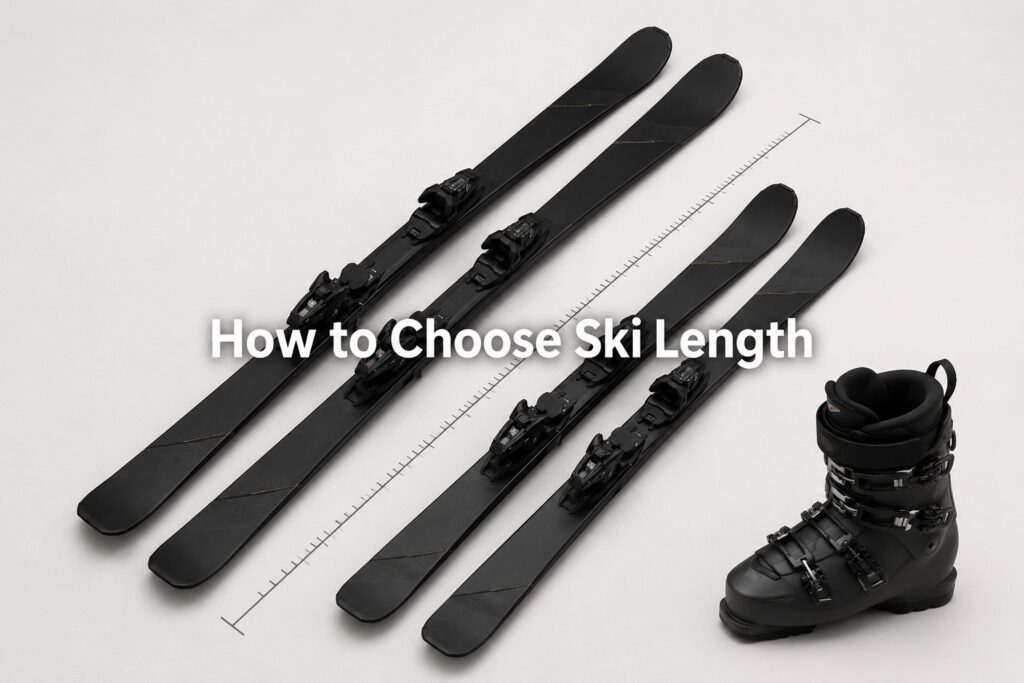
Choosing ski length is one of the most important decisions when buying skis. The wrong length can make a ski feel unstable, too aggressive or difficult to control.
Many simple size charts only use height, but ski length depends on more than that. Your weight, ability, skiing speed, terrain and ski type all matter.
Most recreational skiers should choose skis somewhere between chin and head height. Beginners often do better with slightly shorter skis, while stronger and faster skiers can use longer skis for more stability.
Start With Your Height
Height is the easiest starting point. A shorter ski is usually easier to turn, while a longer ski usually feels more stable at speed.
| Skier type | General ski length guide |
|---|---|
| Beginner | Around chin to nose height |
| Intermediate | Around nose to eye level |
| Advanced | Around eye level to head height |
| Fast or aggressive skier | Head height or slightly longer |
This is only a starting point. Two skiers with the same height may need different ski lengths if their weight, strength and skiing style are different.
Weight Matters Too
A heavier skier usually bends a ski more easily and may need a slightly longer or stronger ski. A lighter skier may find the same ski too stiff or too demanding.
If you are light for your height, you may prefer the shorter end of the recommended range. If you are heavier or ski with more power, the longer end may make more sense.
Ability Level Changes the Right Length
Beginners usually benefit from a shorter ski because it is easier to turn and control. Intermediate skiers can usually move slightly longer as their balance and confidence improve.
Advanced skiers often choose longer skis because they want more edge hold, more stability and more confidence at speed.
Terrain and Ski Type Matter
A piste ski, all mountain ski and powder ski should not always be chosen in the same length.
- Piste skis: can often be slightly shorter for quick turns and easier control.
- All mountain skis: often work best around nose to head height depending on ability.
- Powder skis: are often chosen longer because extra length helps float in soft snow.
- Freestyle skis: may be chosen shorter or true to size depending on use.
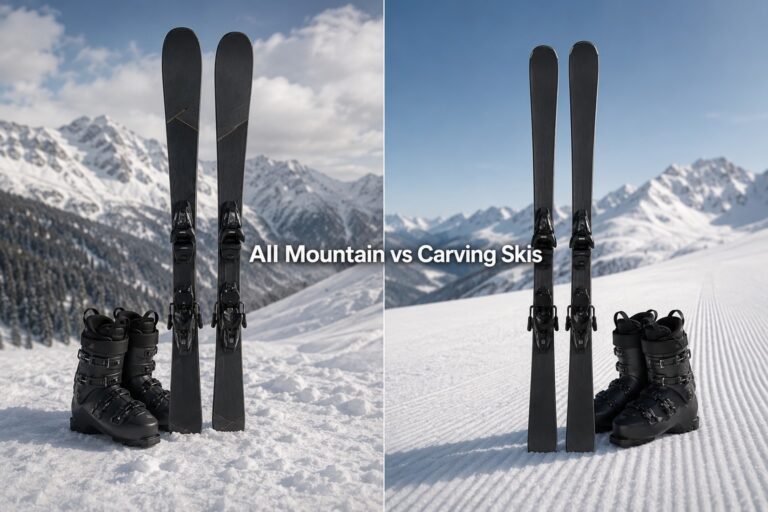
If you are not sure which ski type fits your skiing, read All Mountain vs Carving Skis.
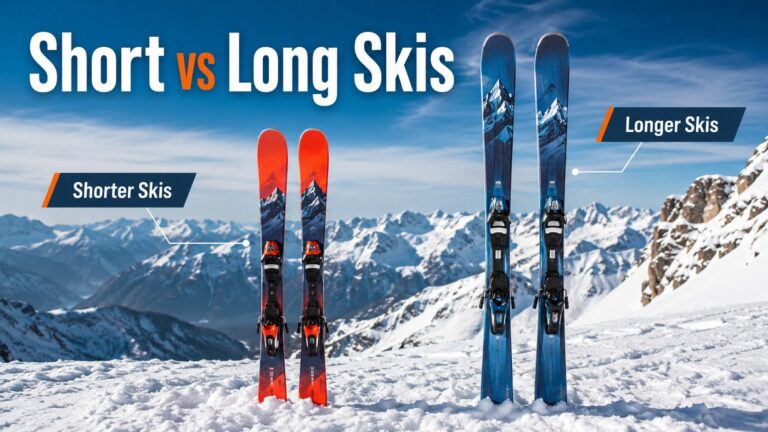
Shorter Skis or Longer Skis?
Shorter skis are usually easier to turn, easier to control and more forgiving. Longer skis usually offer more stability, better float and more edge contact.
For a full comparison, see Short vs Long Skis.
Common Mistakes
- Choosing ski length only from height.
- Buying skis that are too long for a beginner.
- Choosing a soft beginner ski when you are already skiing fast.
- Ignoring weight and skiing style.
- Buying a ski because it is discounted without checking the correct length.
Final Recommendation
Use height as the starting point, then adjust for weight, ability, terrain and ski type. Shorter skis are easier to control. Longer skis are more stable. The right ski length is the one that matches how and where you actually ski.
Our Ski Fitter will help estimate ski length based on practical fit factors. Until then, use this guide as a starting point before comparing models.