


The best time to buy skis is usually near the end of the ski season, when retailers begin clearing stock to make room for the following year’s models.
Previous-season skis can offer excellent value. Recreational piste and all-mountain skis with bindings are sometimes available for less than €300, even when the original price was considerably higher.
When Do Ski Prices Usually Drop?
| Buying period | What to expect |
|---|---|
| Autumn and early winter | Best selection, generally higher prices |
| January and February | Some promotions, but popular sizes remain expensive |
| March and April | Strong balance of discounts and remaining choice |
| Spring and summer | Potentially lowest prices, but limited lengths |
| Black Friday | Good offers, especially on previous-season stock |
Why Previous-Season Skis Can Be a Good Deal
Ski manufacturers update colours and graphics frequently. Some models also receive construction changes, but many previous-season skis remain very similar to the current version.
A ski that originally cost €500 or more may fall below €300 once retailers clear older stock. This can make buying worthwhile even for a skier who takes only one trip per year.
However, do not buy only because the discount percentage looks impressive. The correct ski at 30% off is better than the wrong ski at 60% off.
Check Whether Bindings Are Included
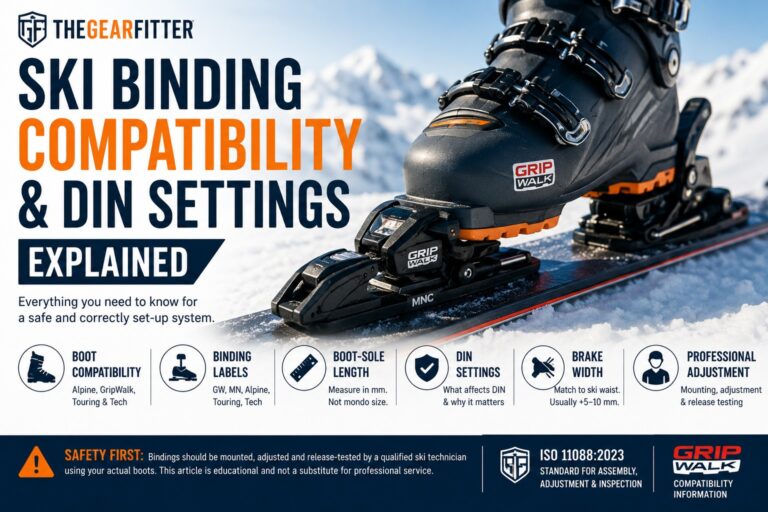
Some online prices include skis and bindings, while others are for the skis only. Before ordering, check:
- whether bindings are included
- whether mounting is included
- whether the shop adjusts the bindings
- the binding’s boot-sole-length range
- the binding release-value range
- available ski lengths
System-binding packages are often convenient for recreational piste and all-mountain skiers because the binding is designed to work with the ski.
Know What You Need Before Shopping
A sale becomes much easier to evaluate when you already know your approximate ski length and preferred ski category.
Start with the Ski Fitter to estimate a practical length range based on height, weight, ability, preferred feel and ski type.
Then check whether the discounted ski is intended for piste, all-mountain, freeride, powder or park use.
Do Not Choose the Wrong Length to Get a Deal
End-of-season stock is often limited. It can be tempting to buy a ski that is noticeably too short or too long because the price is attractive.
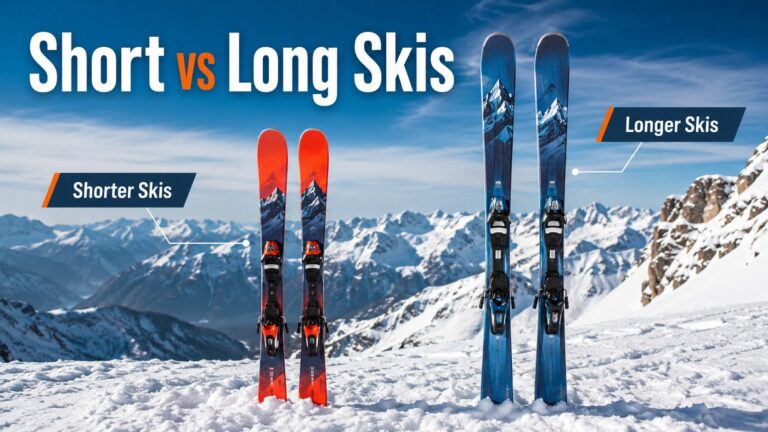
A ski that is too long may be harder to turn, while one that is too short may feel unstable at speed. Stay reasonably close to the length range that suits you.
Buying Used Skis
Used skis can be even cheaper, but they require closer inspection. Check:
- base damage or deep repairs
- remaining edge thickness
- cracks or delamination
- damage around the binding screws
- binding age and serviceability
- boot compatibility and adjustment range
Have used bindings inspected and adjusted by a qualified ski shop before skiing.
When Paying More May Be Better
Waiting until summer may produce the lowest price, but the correct length may already be sold out. Buying slightly earlier can be worthwhile when you need a popular length or a specific model.
Paying €330 for the correct ski is usually better than paying €250 for a ski that does not suit your ability or terrain.
Should You Buy Skis at All?
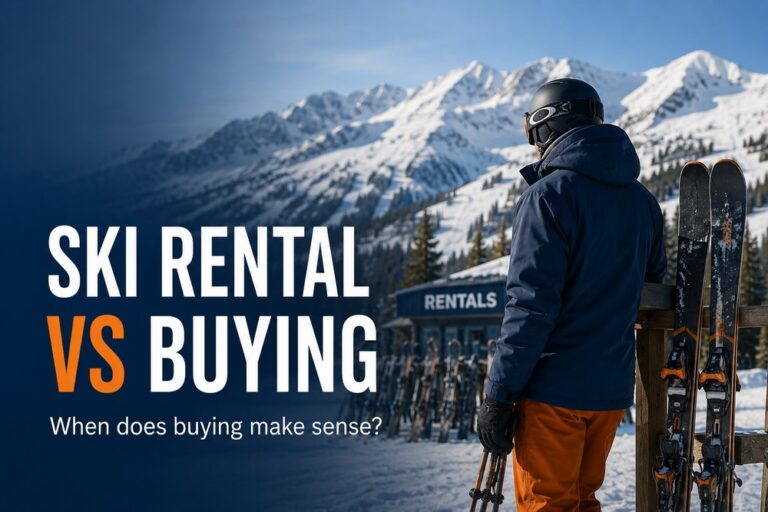
A discounted ski is still an unnecessary expense if renting suits your situation better. Before purchasing, read our ski rental versus buying comparison.
The comparison covers rental costs, time savings, storage, maintenance and how often you need to ski before ownership becomes worthwhile.
Sale-Buying Checklist
- Confirm the correct ski category.
- Check the available length.
- Check the waist width.
- Confirm whether bindings are included.
- Check binding compatibility.
- Look for mounting or adjustment costs.
- Compare the price with other shops.
- Do not buy purely because of the discount.
Bottom Line
March, April and the months after the ski season are often the best times to buy skis. Discounts become stronger as retailers clear previous-season stock, and ski-and-binding packages can sometimes fall below €300.
The best deal is not necessarily the cheapest ski. It is the correctly sized and suitable ski at a price that makes ownership worthwhile.
Frequently Asked Questions
What month is best for buying skis?
March and April often provide a good combination of lower prices and remaining selection. Summer may be cheaper, but fewer lengths are usually available.
Are previous-season skis worth buying?
Yes, provided the ski suits your needs. Previous-season models can offer substantial savings, and some differ mainly in graphics from the newer version.
Can you buy skis with bindings for under €300?
Yes. Previous-season recreational ski-and-binding packages can sometimes be found below €300 during clearance sales.
Should I buy skis without bindings?
Only when you understand the additional binding, mounting and compatibility costs. For many recreational skiers, a complete package is simpler.
Is Black Friday a good time to buy skis?
It can be, especially for previous-season equipment, but end-of-season sales may offer larger discounts.