

Cycling-shoe sizing can be confusing because most brands use EU sizes, fit varies between models and the correct length does not guarantee the correct width.
How to Measure Your Feet
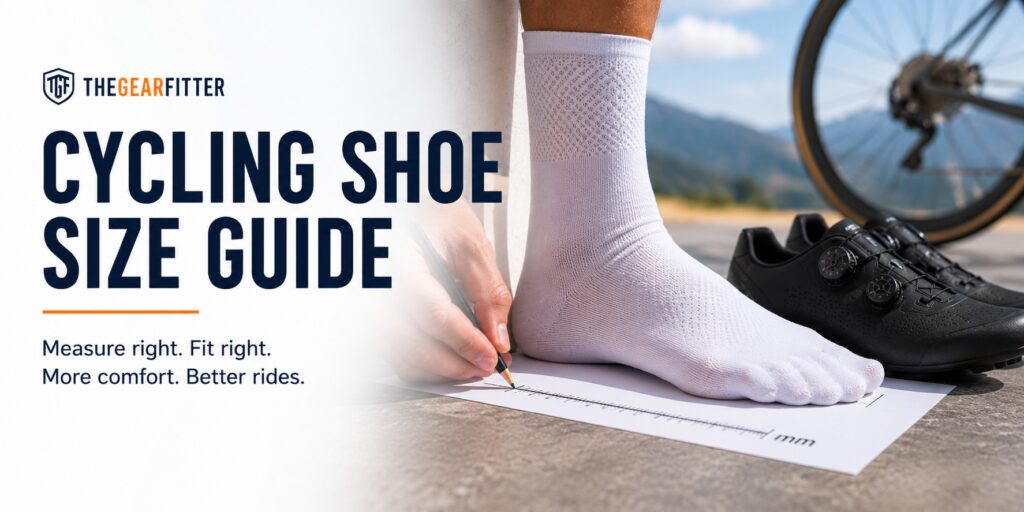
- Place a sheet of paper on a hard floor against a wall.
- Wear the socks you normally use for cycling.
- Stand with your heel lightly touching the wall.
- Mark the end of your longest toe.
- Measure from the wall to the mark in millimetres.
- Repeat for the other foot.
Use the larger measurement when selecting size. Also measure the widest part of each forefoot because length alone cannot identify whether you need a narrow, standard or wide last.
Why EU Sizes Differ Between Brands
An EU 43 from one brand may not have the same internal length or shape as an EU 43 from another. Even within one brand, a race shoe and a relaxed gravel shoe can fit differently.
Manufacturer charts are more useful than generic conversion tables, particularly when they provide foot length in millimetres.
Should Cycling Shoes Fit Like Running Shoes?
No. Running shoes normally need more extra length because the foot moves forward during impact. Cycling shoes hold the foot in a more stable position, so excessive front space can reduce control and make cleat positioning less predictable.
You still need enough room for natural toe movement and swelling, especially on long or hot rides.
Should You Size Up?
Consider sizing up when:
- your foot measurement falls at the top of a size range;
- your toes contact the front;
- you use thicker winter socks;
- the brand does not offer half sizes in your range;
- the next size provides better length without creating heel lift.
Do not size up only because the shoe feels narrow. A longer shoe may still be narrow at the forefoot while becoming too loose at the heel.
Should You Size Down?
Sizing down may work when:
- the brand runs long according to its own chart;
- you are between sizes and the larger size allows movement;
- the model is offered in a wider last that gives space without extra length;
- your heel lifts despite correct closure adjustment.
Your toes should never be pressed against the front. A performance fit is secure, not painful.
What About Half Sizes?
Half sizes can improve fit when one full size feels short and the next feels loose. However, some manufacturers change mainly the upper volume between half sizes while sharing the same outsole length.
Check the brand’s chart rather than assuming every half size adds the same amount of internal length.
Length, Width and Volume
Three measurements determine cycling-shoe fit:
- Length: space from heel to longest toe.
- Width: room across the forefoot.
- Volume: space around the whole foot, particularly the instep and midfoot.
A wide, low-volume foot needs a broad but relatively shallow shoe. A high-volume foot may require more upper adjustment even when its measured width is standard.
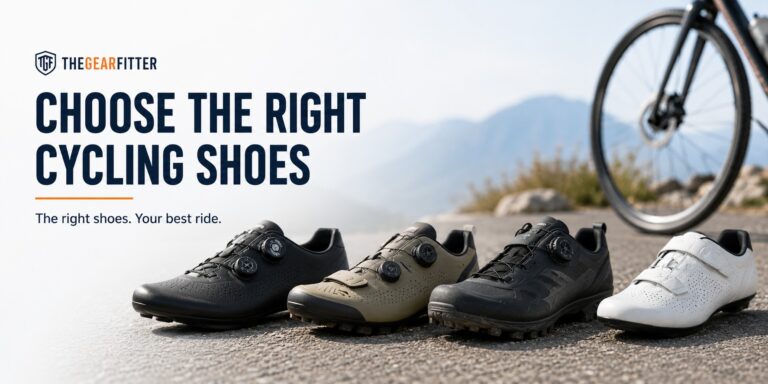
Road, Gravel and MTB Sizing
Road shoes
Road shoes often use a close fit. Avoid excess length because the smooth sole provides little walking flexibility and the foot should remain stable over the cleat.
Gravel and MTB shoes
A small amount of additional toe room can be useful for walking and rough terrain, but the heel must stay secure.
Indoor cycling shoes
Heat and sweat can increase swelling. Avoid starting with a shoe that already feels tight before the session begins.
How to Test the Size at Home
When trying a new pair indoors:
- wear your normal cycling socks;
- tighten the closures only to normal riding tension;
- check that your toes do not touch the front;
- lift the heel gently to test retention;
- remain in the shoes for at least 10–15 minutes;
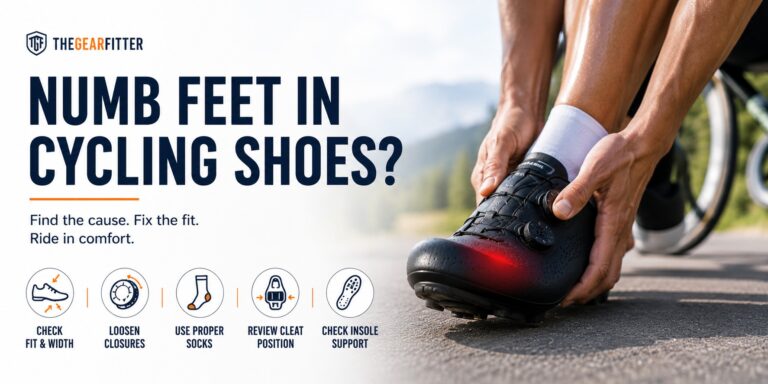
- check for pressure or numbness before mounting cleats.
Common Sizing Mistakes
- Converting directly from casual-shoe size without measuring.
- Sizing up to solve a width problem.
- Testing with very thin socks when thicker socks will be used.
- Ignoring the larger foot.
- Expecting a synthetic upper to stretch substantially.
- Choosing a race fit for relaxed all-day riding.
Final Recommendation
- Measure both feet in millimetres.
- Use the larger foot and the brand’s current chart.
- Check width and volume separately from length.
- Leave modest toe room without allowing the foot to slide.
- Choose a wide last instead of unnecessary extra length.
Our Bike Shoe Fitter can help narrow the correct models by riding type and width. The number printed on the shoe is only useful when the last shape also matches your foot.