

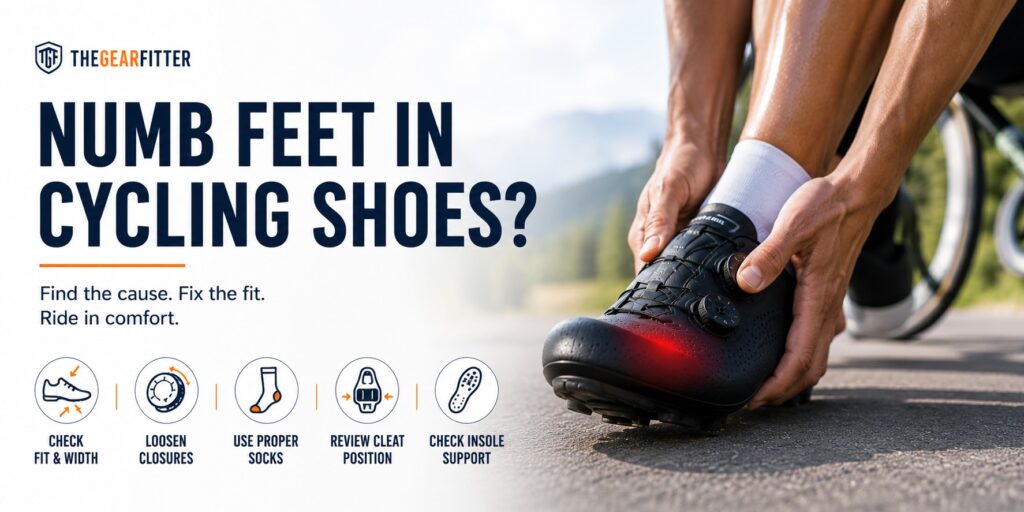
Numb feet in cycling shoes are common, but they should not be accepted as normal. The cause is often pressure: a shoe that is too narrow, a closure pulled too tight or a setup that concentrates load under the forefoot.
1. The Shoe Is Too Narrow
This is one of the most common causes. As your feet warm and swell, a marginally narrow shoe can compress the forefoot and toes.
Typical signs include:
- numb little toes;
- burning across the ball of the foot;
- pressure along the outer edge;
- relief when the front closure is loosened.
A longer size does not necessarily solve this. A genuine wide model is usually better than adding excess length.
2. The Closures Are Too Tight
Many riders tighten their shoes firmly before the ride and never adjust them as their feet swell. Dials and straps should secure the foot, not clamp it.
Try reducing tension at the forefoot while keeping enough hold over the midfoot and heel. If the shoe becomes unstable when loosened, the last may be the wrong shape.
3. The Shoe Has the Wrong Volume
A high-volume foot can experience pressure over the instep even when the forefoot width is correct. A low-volume foot may slide inside a roomy shoe, encouraging the rider to overtighten it.
Independent adjustment zones are useful because they allow the forefoot and instep to be tensioned separately.
4. Your Feet Swell During the Ride
Heat and duration can make a shoe that feels fine at home become restrictive after an hour. This is especially noticeable indoors, where airflow is limited.
Try shoes later in the day, use your normal socks and leave a small amount of adjustment available.
5. Thick or Bunched Socks
Thick socks reduce internal volume. Seams, folds and wrinkles can also create concentrated pressure.
Use smooth cycling socks and make sure they are not bunched beneath the forefoot. Thicker is not automatically more comfortable inside a close-fitting shoe.
6. Cleat Position
A cleat positioned too far forward can increase pressure under the forefoot for some riders. Moving it slightly rearward may spread the load more comfortably, but changes should be made in small steps.
Cleat rotation and stance width can also affect comfort. Mark the original position before adjusting anything.
7. The Sole or Insole Does Not Support Your Foot
A very flat stock insole may not suit every rider. Insufficient support can allow the foot to spread or rotate under load, while excessive arch support can create pressure of its own.
An insole should support the foot without creating a hard ridge or forcing an unfamiliar position.
8. The Shoe Is Too Stiff for Your Needs
A stiff sole is not inherently harmful, but it allows less local flex. If the fit or pressure distribution is poor, a very rigid sole can make the problem more noticeable.
Recreational riders do not always need the stiffest carbon sole. A well-fitting composite sole may feel better over long rides.
What to Try During the Ride
- Loosen the forefoot closure slightly.
- Move your toes and relax your feet.
- Stand briefly to change pressure.
- Check whether a sock has folded.
- Stop if numbness becomes painful or affects control.
What to Check After the Ride
- Measure foot width and compare it with the shoe’s last.
- Check whether the upper overhangs the sole.
- Inspect the insole for concentrated pressure marks.
- Review cleat position and shoe size.
- Test a wider or higher-volume model if symptoms repeat.
When to Seek Medical Advice
Seek professional medical advice when numbness persists after the ride, occurs away from cycling, is accompanied by weakness, severe pain, colour change or swelling, or repeatedly affects only one side.
Cycling-shoe adjustments can solve fit-related pressure, but they cannot diagnose an underlying nerve, circulation or musculoskeletal condition.
Final Recommendation
- Start with width and closure tension.
- Allow for swelling during longer rides.
- Use smooth socks and check insole support.
- Review cleat position carefully.
- Do not ignore persistent symptoms.
Use our Bike Shoe Fitter to compare shoes by foot width and discipline. Numbness is often a sign that the shoe is pressing in the wrong place, not that you simply need to “break it in.”