

Cycling shoes should fit closely, but “tight” is not the goal. A good fit keeps the foot stable over the pedal while allowing the toes to relax and the forefoot to spread naturally.
How Tight Should Cycling Shoes Be?
The shoe should hold the foot firmly enough that it does not move during the pedal stroke. However, you should not need to overtighten the closure to create stability.
A shoe that is too loose can cause heel lift and friction. A shoe that is too tight can compress the forefoot, restrict toe movement and create pressure over the instep.
How Much Toe Room Should Cycling Shoes Have?
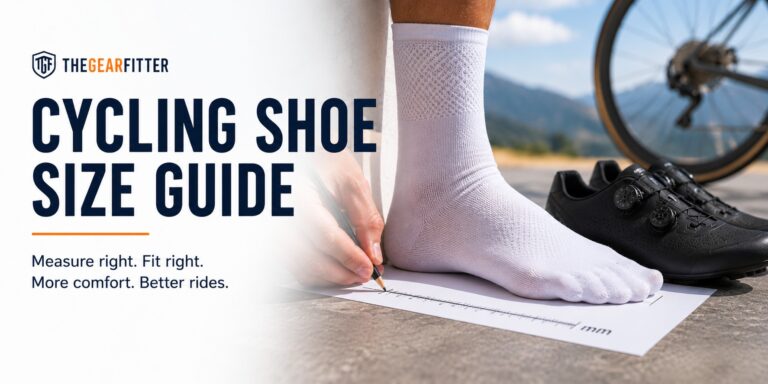
Most riders need a small amount of space in front of the longest toe. Cycling shoes do not need the same extra length as running shoes because the foot is not repeatedly sliding forward on impact.
There should still be enough room for:
- slight foot swelling during long or warm rides;
- natural toe movement;
- thicker socks when required;
- avoiding contact with the front during hard efforts.
If your toes touch the front while seated, the shoe is too short. If you can move the whole foot forward and backward, it is probably too long or too high-volume.
Heel Hold
Your heel should remain seated when pedalling. A small amount of movement while walking can occur in very stiff shoes, but obvious lifting during the pedal stroke usually means the heel shape is too wide, the shoe is too large or the closure is not holding the rearfoot properly.
Do not automatically solve heel lift by tightening the shoe as hard as possible. Excessive tension can create numbness without fixing a mismatched heel shape.
Forefoot Width
The widest part of the foot should sit in the widest part of the shoe. The upper can touch the sides of the foot, but it should not squeeze the joints behind the toes.
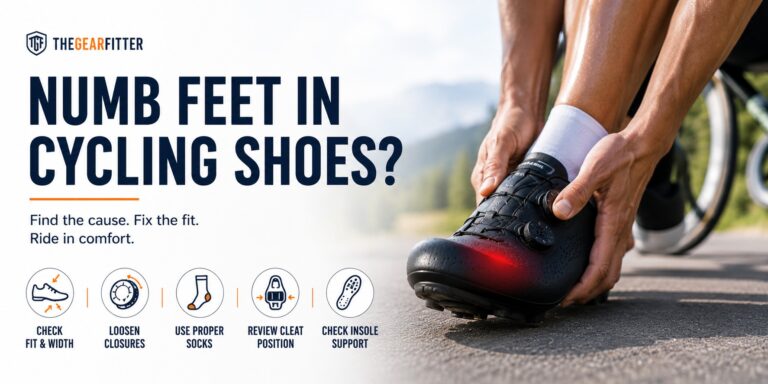
Common signs that a cycling shoe is too narrow include:
- numb or tingling toes;
- burning under the forefoot;
- pressure against the little toe;
- the upper bulging strongly over the sole edge;
- needing to loosen the front closure completely.
Choosing a longer size is not always the answer. A proper wide last usually adds space in the forefoot without adding excessive length.
Foot Volume and Instep Height
Width describes only one part of fit. A low-volume foot may have a narrow heel and shallow instep, while a high-volume foot may need more space above the midfoot even if its measured width is average.
If the closure reaches its limit before the shoe feels secure, the shoe may be too high-volume. If the tongue or cables press painfully into the top of the foot, the shoe may be too shallow.
Should Your Toes Touch the End?
No. Your toes should not be pressed against the front of the shoe. They also should not be curled to fit inside the toe box.
Brief contact when standing may be caused by posture, but there should be no repeated pressure during riding. Persistent contact can lead to discomfort on descents, sprints and longer sessions.
Should Cycling Shoes Feel Tight When New?
A new shoe can feel firm, but do not buy a painful shoe expecting major stretching. Synthetic cycling-shoe uppers may soften slightly, yet the sole shape and overall width will not change dramatically.
Try Shoes at the Right Time
Feet often become slightly larger later in the day and during exercise. Try cycling shoes with the socks you normally use and, when possible, after your feet have been active.
Test both feet because many people have one foot that is slightly longer or wider. Fit the larger foot, then use closure adjustment or an insole to fine-tune the smaller side if necessary.
Fit Differences by Riding Type
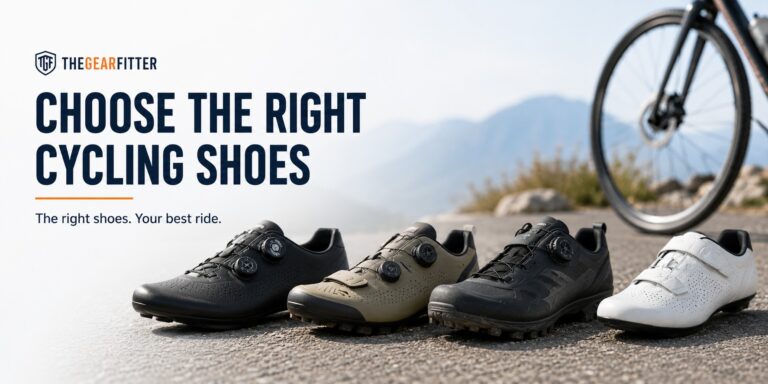
Road
Road shoes often use a close, performance-oriented fit. Recreational riders still need enough forefoot room for longer rides.
Gravel and MTB
These shoes may allow slightly more toe room for walking and rough terrain, but the heel must remain secure.
Indoor cycling
Ventilation and comfort are particularly important. Heat can make an already tight shoe feel noticeably smaller.
Signs the Shoe Is Too Large
- heel lift during the pedal stroke;
- the foot slides toward the front;
- the closure must be tightened to its limit;
- wrinkling or excess upper material;
- reduced control on technical terrain.
Signs the Shoe Is Too Small or Narrow
- toes touch the front;
- numbness or tingling;
- painful pressure at the forefoot;
- hot spots over the instep;
- discomfort increases rapidly during the ride.
Final Fit Test
- Your toes can relax without touching the front.
- Your forefoot is supported but not compressed.
- Your heel remains stable while pedalling.
- The closure has adjustment available in both directions.
- No part of the shoe causes immediate pressure or numbness.
Use our Bike Shoe Fitter to narrow options by riding type and foot width. The size on the box is only a starting point; the correct last shape is what makes a cycling shoe feel secure and comfortable.