

Road, gravel, mountain-bike and indoor cycling shoes may look similar, but they are designed for very different riding conditions.
The main differences are the cleat system, sole stiffness, tread, ventilation and walking comfort. Choosing the wrong type can make clipping in difficult, walking uncomfortable or the shoe unsuitable for your pedals.
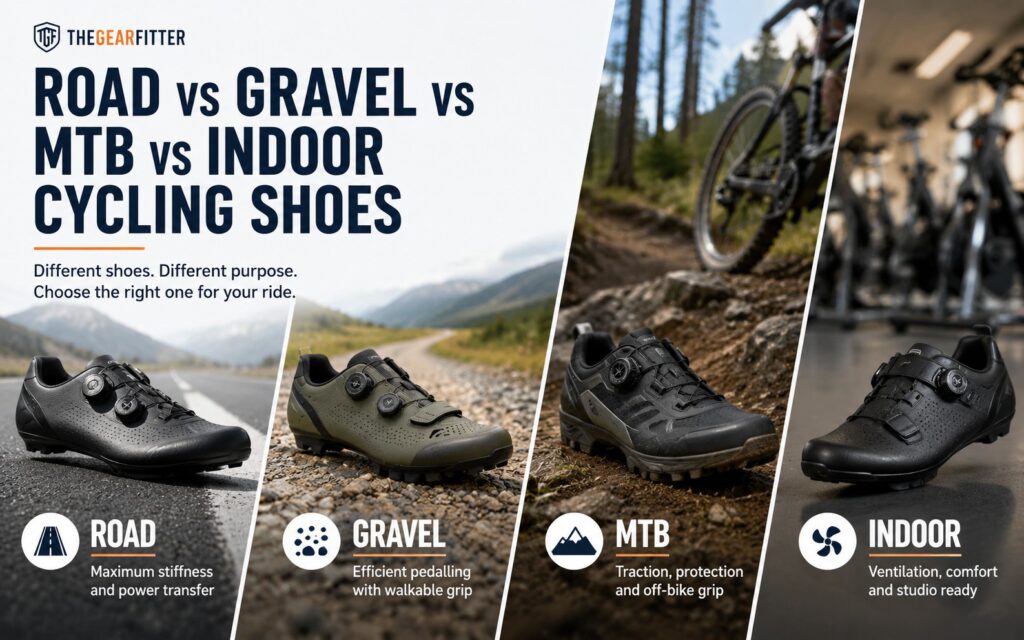
Road shoes prioritise stiffness, low weight and power transfer.
Gravel shoes combine efficient pedalling with enough grip for walking.
MTB shoes provide stronger tread, protection and off-bike traction.
Indoor cycling shoes focus on ventilation, comfort and compatibility with studio pedals.
Road vs Gravel vs MTB vs Indoor Cycling Shoes at a Glance
| Shoe type | Typical cleat | Sole | Walking | Best for |
|---|---|---|---|---|
| Road | Usually 3-bolt | Very stiff and smooth | Difficult | Road riding, racing and long paved rides |
| Gravel | Usually recessed 2-bolt | Stiff with moderate tread | Good | Gravel riding, mixed surfaces and occasional walking |
| MTB | Usually recessed 2-bolt | Protective with aggressive tread | Very good | Trails, technical terrain and hike-a-bike sections |
| Indoor | 2-bolt or 3-bolt, depending on the bike | Moderately stiff and highly ventilated | Varies | Spin classes and indoor training |
Road Cycling Shoes
Road cycling shoes are designed to transfer as much force as possible from the rider into the pedals. They normally have a smooth, rigid sole with very little tread.
Most road shoes use a three-bolt cleat pattern, commonly associated with systems such as Shimano SPD-SL and Look-style road pedals.
Main advantages
- Very efficient power transfer
- Low weight
- Large and stable pedal platform
- Good choice for long road rides and racing
Main disadvantages
- Difficult and awkward to walk in
- Exposed cleats can wear when walking
- Little grip on mud, gravel or wet ground
- Usually unsuitable for recessed two-bolt cleats
Gravel Cycling Shoes
Gravel cycling shoes sit between road and mountain-bike shoes. They aim to provide efficient pedalling while remaining practical when the rider needs to walk over gravel, mud or rough ground.
Most gravel shoes use a recessed two-bolt cleat system. The tread surrounding the cleat helps protect it and provides grip when walking.
Main advantages
- Easier to walk in than road shoes
- Good balance between stiffness and comfort
- Suitable for mixed surfaces
- Recessed cleats are less exposed to wear
- Often lighter and less bulky than full MTB shoes
Main disadvantages
- Usually not as stiff as top road shoes
- Less protective than aggressive MTB shoes
- Tread may still be insufficient for very technical walking sections
Mountain-Bike Shoes
Mountain-bike shoes are built for rougher riding. They normally have a more protective upper, stronger toe and heel areas, and a heavily treaded outsole.
Clipless MTB shoes usually use the same basic recessed two-bolt cleat format found on many gravel shoes. Flat-pedal MTB shoes do not use cleats and instead have a grippy rubber sole designed to hold onto platform pedals.
Main advantages
- Strong traction when walking
- More protection from rocks, roots and impacts
- Better for technical terrain
- Suitable for hike-a-bike sections
- Available for clipless and flat pedals
Main disadvantages
- Usually heavier than road and gravel shoes
- Can feel bulky on long, smooth rides
- Aggressive tread may be unnecessary for easy gravel routes
- Some models prioritise protection over ventilation
Indoor Cycling Shoes
Indoor cycling shoes are designed for spin classes, exercise bikes and indoor training. They generally prioritise ventilation, comfort and quick drying because indoor riding can generate a great deal of heat and sweat.
Cleat compatibility varies. Some studios use two-bolt SPD-style pedals, while others use three-bolt road-style systems. Certain indoor bikes also have dual-sided pedals that accept more than one system.
Main advantages
- High ventilation
- Often lighter and more flexible than outdoor shoes
- Easy to put on and remove
- Designed to handle repeated sweaty sessions
Main disadvantages
- May provide little weather protection outdoors
- Some models are less stiff than performance road shoes
- Cleat compatibility varies between studios
- Lightweight mesh uppers may offer limited protection
Can You Use Road Shoes for Gravel?
Technically, yes, if the pedals and cleats are compatible with your setup. However, road shoes are usually inconvenient when gravel riding involves walking.
The smooth outsole provides little traction, and the exposed cleat can become damaged or clogged with dirt. For clean, fast gravel routes with almost no walking, some riders may still prefer road shoes. For typical mixed-surface riding, gravel shoes are normally more practical.
Can You Use MTB Shoes for Gravel?
Yes. MTB shoes are commonly used for gravel riding because they provide recessed cleats and good walking traction.
The trade-off is that they may be heavier, warmer and more aggressive than necessary. Riders who spend most of their time pedalling on smooth gravel may prefer a lighter gravel-specific shoe.
Can You Use Gravel Shoes for Mountain Biking?
For light trails and non-technical MTB riding, many gravel shoes work well. They use compatible two-bolt cleats and normally provide enough tread for occasional walking.
For technical trails, steep hike-a-bike sections or rocky terrain, dedicated MTB shoes offer better protection and stronger outsole grip.
Can You Use Outdoor Cycling Shoes Indoors?
Yes, provided that the cleat system matches the indoor bike.
A ventilated road, gravel or MTB shoe can work perfectly well indoors. However, heavily treaded MTB shoes may feel unnecessarily bulky, while expensive outdoor shoes may experience additional sweat and wear.
Which Shoes Are Easiest to Walk In?
The general order is:
- MTB shoes – usually the best grip and protection
- Gravel shoes – good grip with less bulk
- Indoor shoes – depends heavily on the sole and cleat system
- Road shoes – normally the most awkward for walking
Walking comfort is influenced by more than tread. Sole stiffness, heel fit, cleat position and the amount of forefoot flex also matter.
Which Shoes Transfer Power Best?
Road shoes usually provide the stiffest sole and the largest pedal platform. This gives them the strongest focus on direct power transfer.
That does not mean every recreational rider needs the stiffest possible shoe. Extremely rigid soles can feel uncomfortable during long rides, particularly if the shoe shape does not match the foot.
Cleat Compatibility Explained
Three-bolt road cleats
Three-bolt systems use a larger exposed cleat. They are commonly found on road cycling shoes and provide a broad contact platform.
Two-bolt recessed cleats
Two-bolt cleats sit inside the tread of gravel and MTB shoes. This makes walking easier and helps protect the cleat.
Flat-pedal shoes
Flat-pedal MTB shoes do not use cleats. Their sticky rubber soles grip metal pedal pins and allow the rider to remove a foot quickly.
Which Cycling Shoe Should You Choose?
- Choose road shoes for paved riding, maximum stiffness and minimal walking.
- Choose gravel shoes for mixed surfaces, efficient pedalling and moderate walking.
- Choose MTB shoes for trails, technical terrain, protection and strong grip.
- Choose indoor shoes for ventilation and frequent studio use—but confirm pedal compatibility first.
Do Not Ignore Foot Width
The riding category does not determine whether a shoe is narrow or wide. A road shoe can be wide, and an MTB shoe can be narrow.
Check:
- Forefoot width
- Toe-box shape
- Midfoot volume
- Heel width
- Closure adjustment
- Whether the brand offers multiple width options
If your feet become numb, your toes feel compressed or your heel lifts, the shoe may be the wrong shape even if the size number appears correct.
Final Recommendation
Road, gravel, MTB and indoor cycling shoes are designed around different priorities.
Road shoes maximise stiffness and efficiency. Gravel shoes balance pedalling performance with walkability. MTB shoes add grip and protection, while indoor shoes focus on ventilation and studio compatibility.
Use our Bike Shoe Fitter to compare suitable cycling shoes by discipline, foot width and performance level.