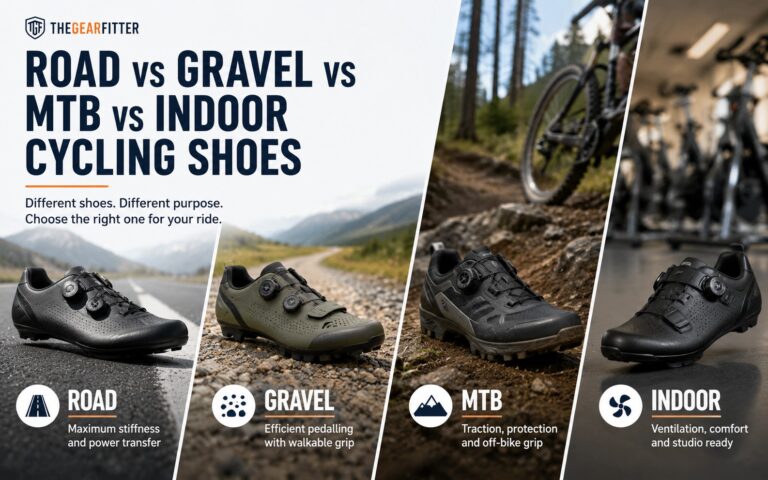


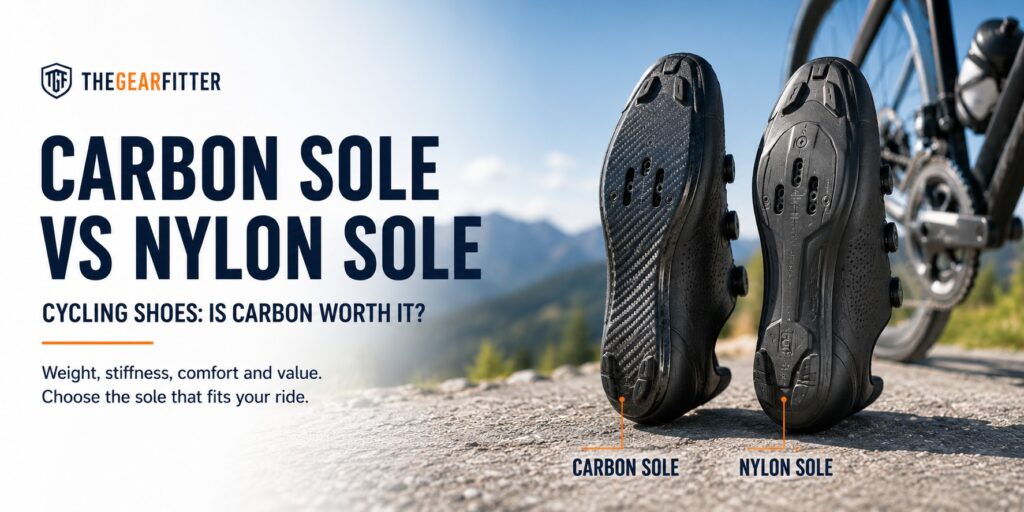
Carbon-soled cycling shoes are lighter and usually stiffer than nylon-soled shoes, but that does not make them the best option for every rider. Fit, pressure distribution and intended use matter more than the material name alone.
Carbon vs Nylon at a Glance
| Feature | Carbon sole | Nylon/composite sole |
|---|---|---|
| Stiffness | Usually very high | Low to high, depending on design |
| Weight | Usually lighter | Usually heavier |
| Price | Higher | More affordable |
| Road feel | Direct and firm | More forgiving |
| Walking | Often less comfortable | Can allow more flex |
| Best for | Racing and performance | Beginners, training and value |
What Does Sole Stiffness Do?
The sole supports the foot and connects it to the pedal. A stiffer sole bends less under load, which creates a firm and direct feeling.
However, power transfer is not determined by stiffness alone. A shoe that fits poorly can allow movement, create pressure and reduce comfort regardless of its sole material.
Advantages of Carbon Soles
- High stiffness at relatively low weight.
- Direct feel during hard accelerations.
- Often paired with premium uppers and closures.
- Popular for racing and performance road riding.
Carbon construction can be especially attractive to riders who sprint, race or want a low-profile premium shoe.
Disadvantages of Carbon Soles
- Higher price.
- Less forgiving when fit is imperfect.
- Can feel harsh to some riders over long distances.
- Often less practical for walking.
- Minor performance gains may be difficult to notice recreationally.
Advantages of Nylon and Composite Soles
- Lower price.
- A broad range of stiffness levels.
- Often more comfortable for casual and long rides.
- Suitable for beginners and regular training.
- Can be more practical in gravel and MTB shoes.
Modern reinforced nylon soles can be quite stiff. “Nylon” does not automatically mean soft or inefficient.
Disadvantages of Nylon Soles
- Usually heavier than premium carbon.
- May flex more during hard efforts.
- Can feel less direct to powerful or competitive riders.
- Lower-priced shoes may use simpler uppers and closures.
Does Carbon Improve Performance?
Carbon can provide a stable, direct platform and lower shoe weight. Whether that produces a meaningful improvement depends on the rider, effort and comparison shoe.
For many non-racers, correct fit and cleat position will produce a larger practical benefit than changing from a good composite sole to carbon.
Which Is More Comfortable?
Neither material is automatically more comfortable. Comfort depends on:
- last shape;
- forefoot width;
- insole support;
- upper pressure distribution;
- cleat position;
- how stiff the complete shoe is.
A carbon shoe that matches your foot can be very comfortable. A carbon shoe that is too narrow can feel worse because the sole does not yield.
Which Is Better for Road Cycling?
Carbon is common in performance road shoes. Recreational and endurance riders can still be well served by a reinforced nylon or composite sole, especially when comfort and price matter.
Which Is Better for Gravel and MTB?
Off-road shoes need to balance pedalling with walking and terrain feedback. Carbon-soled gravel and MTB shoes exist, but moderate flex can be useful during hike-a-bike sections.
Choose according to how much you walk and how technical the terrain is, not simply according to the premium material.
Which Is Better for Indoor Cycling?
Both work. A stiff carbon road shoe can feel excellent on a smart trainer, but a ventilated nylon-soled indoor shoe may be more practical and less expensive for spin classes.
Who Should Buy Carbon?
- Racers and performance-focused riders.
- Riders who value low weight.
- Powerful riders who dislike sole flex.
- Anyone who has already confirmed the shoe fits properly.
Who Should Choose Nylon or Composite?
- Beginners buying their first cycling shoes.
- Recreational and fitness riders.
- Riders prioritising value.
- Gravel or MTB riders who walk regularly.
- Anyone who prefers a slightly more forgiving platform.
Final Verdict
Carbon is worth it when low weight, maximum stiffness and a premium performance feel matter to you.
Nylon or composite is the smarter choice when you want good performance, better value and enough comfort for everyday riding.
The sole material should be the final filter, not the first. Use our Bike Shoe Fitter to find the correct discipline and fit before deciding how much stiffness you need.