

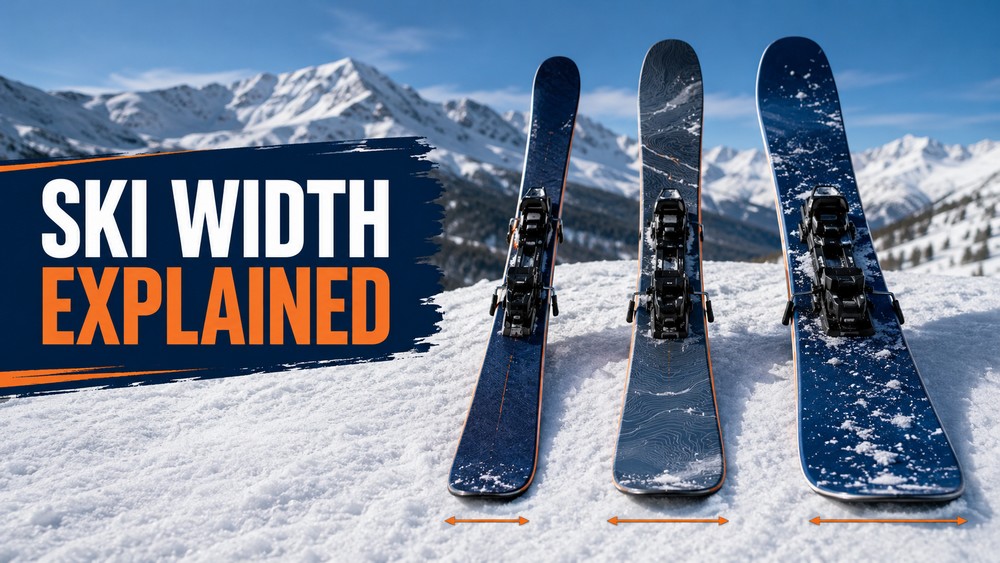
Ski width is one of the most important ski measurements. It changes how quickly a ski moves from edge to edge, how much float it has in soft snow and how stable it feels in mixed conditions.
When people talk about ski width, they usually mean the waist width. That is the width under your boot.
Narrower skis are usually better for groomed piste and quick edge changes. Wider skis are usually better for soft snow, mixed conditions and float.
What Is Ski Waist Width?
The waist is the narrowest part of the ski, usually measured in millimetres under the boot. A ski with an 80 mm waist is much quicker from edge to edge than a ski with a 105 mm waist.
Width does not tell the full story, but it gives a strong clue about what the ski is built for.
General Ski Width Guide
| Waist width | Typical use |
|---|---|
| Under 75 mm | Mostly piste and carving |
| 75 to 85 mm | Piste with some versatility |
| 85 to 95 mm | All mountain use |
| 95 to 105 mm | Soft snow and freeride leaning all mountain |
| Over 105 mm | Powder and deep snow focus |
Narrow Skis
Narrow skis are usually easier to roll onto edge. They feel quick and precise on groomed slopes.
They are a good fit for skiers who mostly stay on piste and want clean, controlled turns.
Medium Width Skis
Medium width skis are often used for all mountain skiing. They still work on groomed slopes, but they add more stability and float when the snow becomes softer or rougher.
For many recreational skiers, this is the most versatile category.
Wide Skis
Wide skis are built for soft snow, freeride and powder. They offer more float, but they can feel slower edge to edge on hard piste.
If you ski mostly groomed slopes, a wide ski may feel unnecessary and less precise.
Width and Ability Level
Beginners usually do not need very wide skis. A forgiving piste or narrower all mountain ski is often easier to control.
Intermediate skiers can choose slightly wider skis if they want more versatility. Advanced skiers may choose wider skis for specific terrain and snow conditions.
Width and Ski Type
Ski width should match ski type. A carving ski is usually narrow. An all mountain ski is usually medium width. A powder ski is wide.
For more help choosing a type, read All Mountain vs Carving Skis.
Final Recommendation
Choose ski width based on where you actually ski. If you mostly ski groomed slopes, choose narrower skis. If you want one ski for changing snow, look at all mountain widths. If you ski soft snow and powder, wider skis make more sense.