

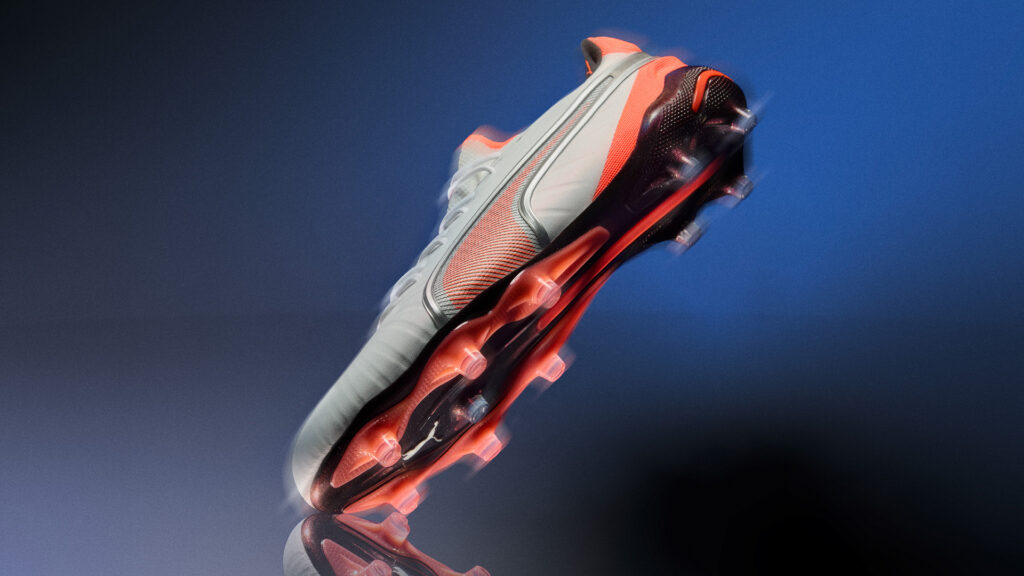
The Puma Ultra has changed significantly across generations. Older discussions often call it a narrow speed boot, while current Puma material presents the Ultra as more accommodating.
Width: Medium, with some current versions suitable for medium-wide feet
Volume: Average
Sizing: Start true to size
Best for: Average feet wanting speed performance without an extremely narrow shape
Avoid if: A genuinely extra-wide or very high-volume foot
How This Fit Profile Was Researched
This is a research-based fit profile rather than a claim that TheGearFitter has personally tested every version. The assessment combines manufacturer sizing and construction information with recurring fit patterns reported across specialist boot coverage, retailer guidance and player feedback.
Boot fit can change between generations, price tiers and soleplates. Treat the classification below as a strong starting point and, where possible, try on the exact version you intend to buy.
Is the Puma Ultra Narrow or Wide?
The safest current classification is medium, with some versions extending toward medium-wide. Puma explicitly promotes current Ultra models as suitable for wider feet. That does not make every Ultra a true wide-fit boot, so very wide feet should still compare broader alternatives.
Toe-Box Shape
The toe area is speed oriented but less aggressively tapered than many narrow-only boots. Current versions can provide useful forefoot space while retaining a close sensation.
Midfoot Volume
Support structures such as PWRTAPE hold the foot without making the whole midfoot exceptionally narrow. Average-volume feet are the clearest match; a high instep may still feel pressure.
Heel Lockdown
The rear is designed for stable acceleration. Correct sizing should feel secure without extreme lace tension, though narrow heels should still check for lift.
Does the Puma Ultra Fit True to Size?
True to size is the best starting point. If your toes reach the end, compare half a size up. If the length is correct but one area remains tight, a different shape is usually better than simply adding length.
Differences Between Price Tiers and Versions
- Ultimate: Lightest and thinnest construction.
- Pro: Performance focused with more structure.
- Match: More accessible and durable.
- Play: Entry-level model that should not be expected to mirror Ultimate.
Puma also sells women-specific Ultra versions built on a different silhouette, so check the exact listing.
AG vs FG Fit
Dedicated AG and FG versions can feel different because of plate flex and stud geometry. The broad fit classification remains similar, but underfoot sensation changes.
Who Should Choose the Puma Ultra?
- Average-width feet
- Some medium-wide feet, depending on generation
- Players wanting a less restrictive speed boot
- Players valuing light weight with structured lockdown
Who Should Avoid It?
- Very wide or very high-volume feet
- Players wanting a traditional rounded fit
- Buyers relying on reviews of another generation
- Buyers assuming men’s, women’s and unisex versions share one last
Puma Ultra Compared With Similar Boots
| Boot | Approximate fit | Main distinction |
|---|---|---|
| Puma Ultra | Medium to medium-wide | Current shape is more accommodating than its old reputation |
| Nike Mercurial | Narrow to narrow-medium | More consistently contoured |
| Adidas F50 | Narrow-medium | Closer fit with laced and laceless options |
| Nike Tiempo | Medium to medium-narrow | Softer comfort-led construction |
Final GearFitter Verdict
The current Ultra should not automatically be labelled narrow. It is better treated as an average-width speed boot that can also work for some medium-wide feet.
Check your match in the Football Boot Finder
Last reviewed: June 2026. Fit can vary by generation, tier and soleplate.