

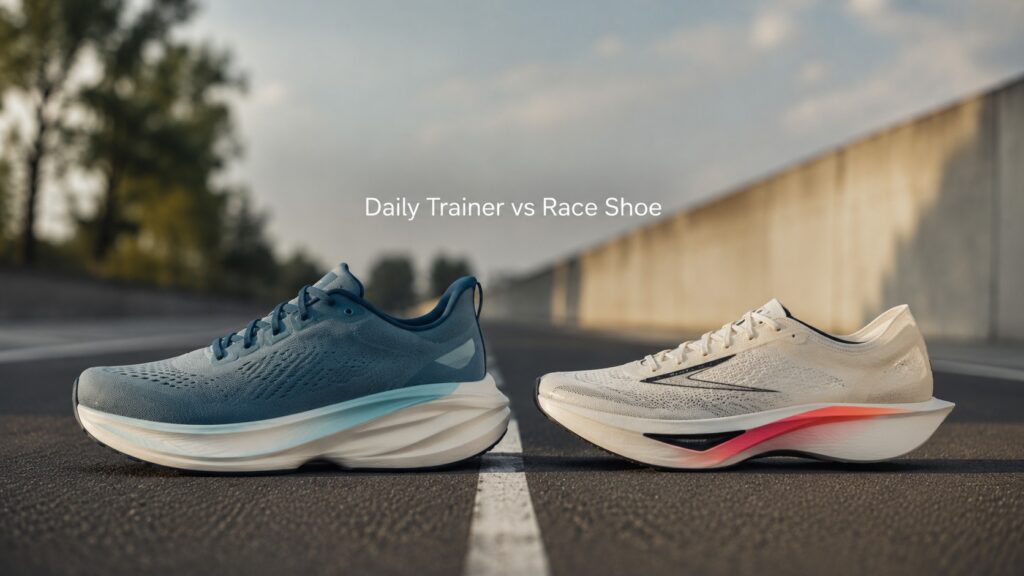
Daily trainers and race shoes are built for different jobs. A race shoe can feel fast and exciting, but that does not mean it is the best shoe for everyday running.
Most runners need a reliable daily trainer before they need a dedicated race shoe.
What Is a Daily Trainer?
A daily trainer is the running shoe you use most often. It is built for comfort, durability and repeated training.
Daily trainers are usually more forgiving than race shoes. They often have more stable platforms, more durable outsoles and a less aggressive ride.
Daily trainers are best for:
- easy runs
- regular weekly mileage
- beginner running
- long slow runs
- general fitness running
What Is a Race Shoe?
A race shoe is built for performance. Modern race shoes may use very light foams, carbon plates, aggressive rockers and narrow racing fits.
They can help some runners run faster, but they are usually more expensive and less durable.
Race shoes are best for:
- race day
- time trials
- important faster workouts
- experienced runners who know what they like
Why Fast Shoes Are Not Always Daily Shoes
Race shoes often feel unstable at slow pace. They may also be less comfortable for relaxed running because they are designed to encourage forward motion.
Some race shoes have narrow platforms and stiff plates. That can be useful at speed, but unnecessary for everyday mileage.
Durability Difference
Daily trainers are usually built to handle more mileage. Race shoes often prioritize low weight and performance over long-term durability.
If you use race shoes every day, they may wear out quickly and become expensive to replace.
Stability Difference
Daily trainers often provide more predictable stability. Race shoes can feel tall, narrow or bouncy.
If you are a beginner or you run mostly easy miles, a stable daily trainer is usually the better choice.
Can You Train in Race Shoes?
Yes, but use them selectively. They can be useful for race-pace sessions, intervals or long runs with faster segments.
They do not need to be your everyday shoe.
Best Shoe Setup for Most Runners
One-shoe rotation
Choose a comfortable daily trainer.
Two-shoe rotation
Use a daily trainer for most runs and a lighter faster shoe for workouts.
Race-focused rotation
Use a daily trainer, a workout shoe and a race shoe.
Common Mistakes
Buying a race shoe because it is popular
A shoe that works for elite runners may not be the best choice for your pace, foot shape or training.
Using race shoes for every run
This can be expensive and may reduce stability or durability.
Assuming carbon means better for everyone
Some runners benefit from plated shoes more than others. Comfort and fit still matter.
Bottom Line
A daily trainer is the smarter choice for most regular running. A race shoe can be a useful extra tool, but it should not replace a comfortable and reliable training shoe.
Choose the shoe by purpose first: daily comfort for training, speed for racing.
Use the Running Shoe Fitter to decide whether you need a daily trainer, stability shoe, trail shoe or faster shoe.