


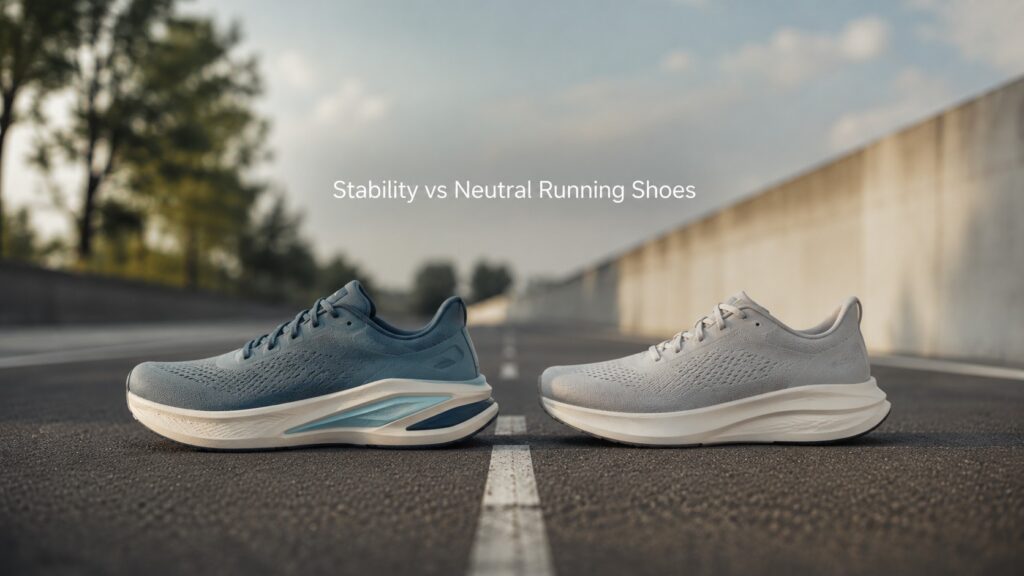
One of the most common running shoe questions is whether you need a neutral shoe or a stability shoe. The answer is not as simple as looking at your foot shape or doing one quick wet-foot test.
A running shoe should feel comfortable, stable and natural when you run. Support can help some runners, but too much correction can feel awkward for others.
What Is a Neutral Running Shoe?
A neutral running shoe does not try strongly to guide your foot inward or outward. It mainly provides cushioning, fit and a stable platform.
Neutral shoes can still be stable. Many modern neutral daily trainers have wide midsoles, sidewalls and supportive uppers without being traditional stability shoes.
Neutral shoes often work well for:
- runners with a comfortable natural stride
- runners who do not feel the ankle collapsing inward
- people who want a simple daily trainer
- runners who find stability shoes intrusive
What Is a Stability Running Shoe?
A stability running shoe is designed to reduce excessive inward rolling, often called overpronation. Older stability shoes used firm medial posts. Newer models often use wider platforms, sidewalls, guide rails or geometry instead.
The goal is not to lock the foot in place. The goal is to create a more controlled and confident ride.
Stability shoes often help if:
- your ankle rolls inward noticeably
- you feel unstable in soft neutral shoes
- your shoes wear heavily on the inner side
- you have been advised to use support
- you prefer a guided ride
Does Overpronation Always Need Correction?
No. Pronation is a normal part of running. The problem is not pronation itself, but whether your movement pattern, strength, training load and shoe choice create discomfort or inefficiency.
Many runners pronate and do perfectly well in neutral shoes. Others feel better with support.
How to Tell Which Type Makes Sense
Choose neutral if:
- you feel stable in regular running shoes
- you do not have recurring inward-collapse issues
- support shoes feel like they push your foot unnaturally
- you want a lighter and simpler daily trainer
Choose stability if:
- neutral shoes feel wobbly
- your foot rolls inward strongly when tired
- you need more structure for longer runs
- you have used stability shoes successfully before
Modern Stability Is Not Always Heavy
Stability shoes used to feel bulky and stiff. Many newer stability shoes feel closer to neutral daily trainers. They simply add guidance through shape, sidewalls or platform width.
That is good news for runners who need support but do not want an old-fashioned motion-control feel.
Common Mistakes
Buying stability shoes only because you have flat feet
Flat feet do not automatically mean you need a stability shoe. How your foot moves while running matters more than foot shape alone.
Avoiding stability shoes because they sound slow
If a shoe helps you run more comfortably and consistently, it can be the better training shoe even if it is not marketed as fast.
Using pain as the only test
If you have recurring pain, do not solve it only with shoes. Training volume, strength, mobility and recovery matter too.
Bottom Line
Neutral running shoes are the right starting point for many runners. Stability running shoes are useful when you need more guidance, structure or confidence underfoot.
The best choice is the shoe that feels comfortable, stable and natural during your actual runs.
Use the Running Shoe Fitter to decide whether neutral or stability shoes make more sense for your training.